


Hello, you are using an old browser that's unsafe and no longer supported. Please consider updating your browser to a newer version, or downloading a modern browser.

CNCF Exam Prep

Certified Kubernetes Administrator Fast Track Boot Camp

Three full days of hands-on, lab-based CKA Fast Track training for people who already run Kubernetes. Build kubeadm clusters, back up and restore etcd, troubleshoot networking and DNS, and finish with a mock exam.

Verified for 2026 CKA Exam
Student
Student
Student
Join 250,000+ certified alumni.
CISSP Professional

Free Retake

Course Retake Included

Fast Track

For Daily Kubernetes Users

Live Online. Hands-On. Built for the Exam.

Start Monday. Exam-Ready by Wednesday. Real Clusters. Mock Exam.

Three days for systems administrators, site reliability engineers, and team leads who already work with Kubernetes and want the CKA without a five-day class. Newcomers should start with the 5-day CKA boot camp.

Program Abstract

REF: CKA 5
Curriculum aligned to the latest Exam Outline.
Format Live, Instructor-Led
Duration 3

The CKA Is Hands-On. So Is This Class.

The CKA is a 2-hour, performance-based exam solved at the command line in a live cluster, so this class is built the same way. The CKA Fast Track compresses the administrator curriculum into three full days of lecture and lab for people who already use Kubernetes daily. You build clusters with kubeadm, snapshot and restore etcd, upgrade and purge the cluster, set RBAC and resource quotas, configure NetworkPolicy, Gateway API and CoreDNS, and troubleshoot what breaks. The class ends with a mock exam.

Built to the CNCF Exam Curriculum.

Every module maps to a CKA domain: cluster architecture and installation, workloads and scheduling, services and networking, storage, and troubleshooting. Lectures lead into labs in a real cluster and timed practice tasks.

Mock Exam Before the Real One.

The final day ends with a timed mock CKA exam that mirrors the format and time pressure of the real test, so you book the real exam knowing exactly where you stand.

Real Clusters. Real Recovery.

You work in a live, multi-node lab environment, not a simulator. Labs include building a kubeadm cluster, joining nodes, snapshotting and restoring etcd, upgrading the cluster, writing NetworkPolicy, and configuring CoreDNS.

·
Training materials including official courseware and study guides
Practitioner Led
Instructors are working security professionals, not just trainers.

"I don't teach from a textbook. I teach what happens in the SOC when the alert fires."

Jeff Porch

VP Ed. Services • CISSP, CISM CISSP: Certified Information Systems Security Professional. CISM: Certified Information Security Manager.

Choose Your Delivery Mode.

Same Curriculum
In-person classroom training session
A

In-Person

Immersive classroom instruction with direct instructor access, hands-on labs and peer collaboration.

  • Face-to-face instruction
  • Group whiteboard sessions
Student attending live online training
B

Live Online

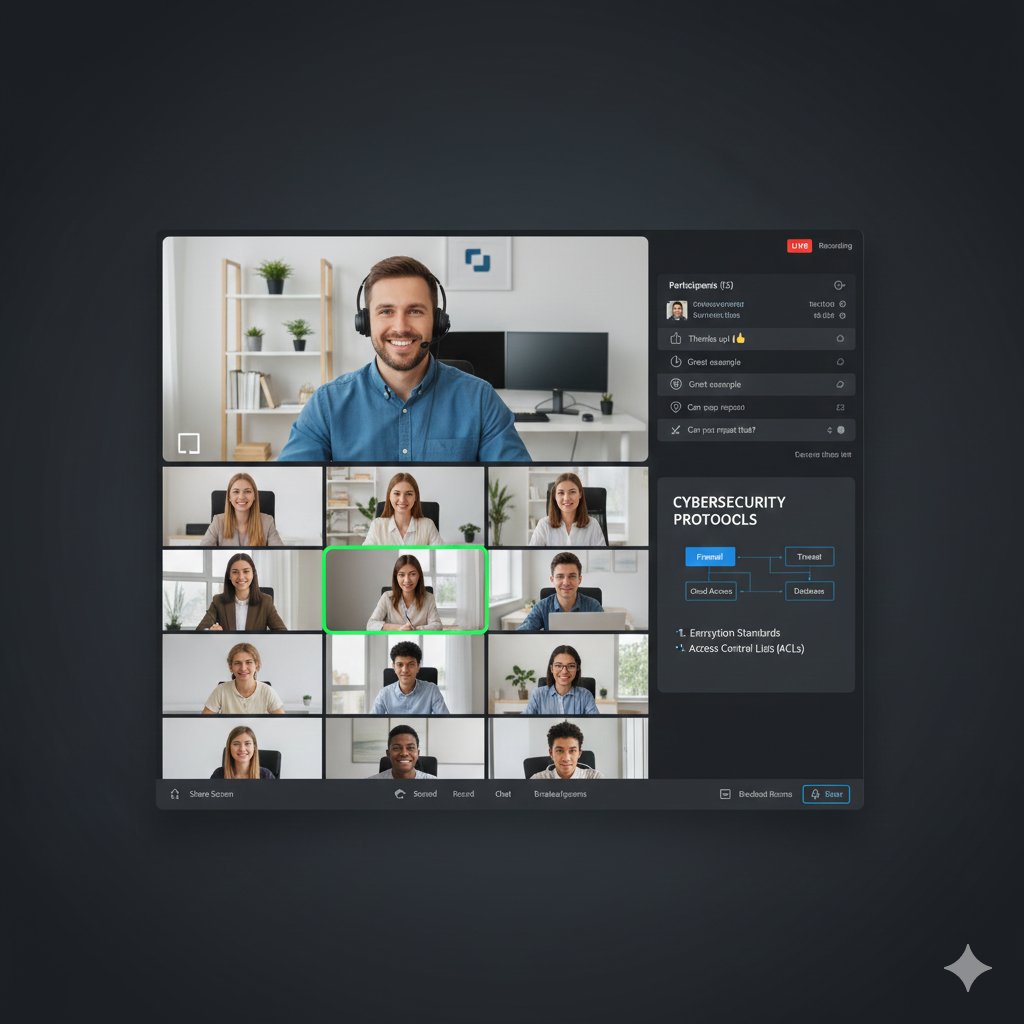
The same instructors and curriculum, delivered live from anywhere on our virtual learning platform.

  • Zero travel required
  • Interactive breakout rooms
Which class fits you?

New to Kubernetes? Start with the 5-day boot camp.

The Fast Track assumes you already work in a cluster every day. If containers and kubectl are still new to you, the five-day CKA boot camp covers the same domains with more lab time.

See the 5-Day CKA Boot Camp
Get Started Today

Explore Your Training Options

Tell us about your training needs and we'll create a personalized plan.

Award ribbon icon

The Administrator Credential From CNCF.

The Certified Kubernetes Administrator (CKA) is issued by CNCF with the Linux Foundation and earned by solving tasks in a live cluster. This 3-day Fast Track is for working administrators.

Clock icon

Three Days. Five Domains. One Mock Exam.

Three full days, live online, with an instructor. Short lectures lead into labs in a real cluster, practice tasks close each topic, and the class ends with a mock exam.

Flower icon

Real Clusters, Not Slides.

You build a cluster with kubeadm, join nodes, snapshot and restore etcd, and upgrade the control plane. Later labs cover RBAC, quotas, ConfigMaps, Helm, Kustomize, NetworkPolicy, Gateway API, and CoreDNS.

Light bulb icon

All Five CNCF Exam Domains Covered.

Five CKA domains: Troubleshooting 30%, Cluster Architecture, Installation and Configuration 25%, Services and Networking 20%, Workloads and Scheduling 15%, and Storage 10%. Every module maps to one.

Stars icon

Exam Strategy Built In.

The class opens with a lecture on the CKA exam format and strategy, works through timed practice tasks in every domain, and closes with a mock exam.

Sunglasses icon

Free Course Retake and Post-Class Support.

You may retake the class at no cost within one year. After class you keep the courseware and have post-class mentoring, so you can ask questions while you finish preparing.

CKA Fast Track Boot Camp

Accepting Inquiries
+1

    Eligible for Special Pricing?

    We respect your privacy. No spam.

    COURSE STRUCTURE

    CKA Fast Track Boot Camp Syllabus
    Syllabus

    A structured path designed for working professionals.
    Each day builds on the last—momentum is everything.

    Download Syllabus

    MODULE_ID: PREP

    Live Training QS: ~5
    BEFORE CLASS
    Critical Path

    Before Class

    Refresh core Kubernetes Fundamentals concepts: Pods, Deployments, Services, and namespaces
    L.prep.1
    Brush up on Linux command line skills and a terminal text editor
    L.prep.2
    Review the CNCF CKA exam curriculum and the five domain weights
    L.prep.3
    Confirm access to the hands-on lab environment
    L.prep.4

    MODULE_ID: CKA-FT-01

    Live Training QS: ~5
    DAY ONE
    Critical Path

    Cluster Building and Administration

    The CKA exam: format and domains
    L.01.1
    Lab: Kubeadm prerequisites
    L.01.2
    Lab: Configure network plugin requirements
    L.01.3
    Lab: Installing kubeadm and building a basic cluster
    L.01.4
    Lab: Join a node to the cluster
    L.01.5
    Lab: ETCD snapshot and restore
    L.01.6
    Lab: Kubeadm cluster upgrade
    L.01.7
    Lab: Purge kubeadm
    L.01.8
    Lab: Deploy Kubernetes using Ansible
    L.01.9
    Container essentials
    L.01.10
    Lab: Creating a Docker image
    L.01.11

    MODULE_ID: CKA-FT-02

    Live Training QS: ~6
    DAY TWO
    Critical Path

    Pods, Resources, Access, and Configuration

    Manifests for Pods and Lab: Create and configure basic Pods, with CKA practice
    L.02.1
    Lab: Kubectl top and application monitoring
    L.02.2
    Limits, requests, and namespace ResourceQuotas, with Lab: Resource requests and limits
    L.02.3
    Lab: Namespace resource quota and Lab: Create a LimitRange admission controller
    L.02.4
    Lab: Contexts
    L.02.5
    Role Based Access Control, with Lab: RBAC and Lab: RBAC distributing access
    L.02.6
    Lab: Persistent configuration with ConfigMaps, with CKA practice
    L.02.7
    Lab: Create and consume Secrets, with CKA practice
    L.02.8
    Multi-container Pods and Lab: Creating ephemeral storage for a Fluentd logging sidecar
    L.02.9
    Lab: Understand the init container multi-container Pod design pattern
    L.02.10
    Lab: Tainted nodes and tolerations
    L.02.11
    Lab: Utilize container logs, labels and selectors, and insert an annotation
    L.02.12

    MODULE_ID: CKA-FT-03

    Live Training QS: ~6
    DAY THREE
    Critical Path

    Workloads, Storage, Networking, and Mock Exam

    ReplicaSets and DaemonSets, with Lab: Create and configure a ReplicaSet
    L.03.1
    Deployments, purpose and advantages, with Lab: Create and configure a Deployment and CKA practice
    L.03.2
    Lab: Performing rolling updates and rollbacks, with CKA practice
    L.03.3
    Blue/green and canary strategies, with Lab: Advanced deployment strategies
    L.03.4
    Horizontal scaling and the Horizontal Pod Autoscaler mastery challenge
    L.03.5
    Persistent Volumes, Claims, and StorageClasses, with Lab: Persistent storage with NFS
    L.03.6
    Lab: Introduction to Custom Resource Definitions
    L.03.7
    Lab: Making charts and templates with Helm, deploying existing packages, and using Kustomize
    L.03.8
    Lab: Deploy a NetworkPolicy and a namespace network policy
    L.03.9
    Services (LoadBalancer, NodePort, ClusterIP), with Lab: Access to applications via services and Lab: Gateway API routing
    L.03.10
    Lab: Network troubleshooting, hostnames and FQDNs, and installing and configuring CoreDNS
    L.03.11
    CKA mock exam and review
    L.03.12
    COURSE PROGRESS Day 0 of 3
    DoD Cyber Workforce Framework

    All the Kubernetes Administration Skills. Half the Time to Certification.

    Three days of live, lab-based CKA Fast Track training for administrators who already run clusters and want the credential.

    Risk Assessment Asset Security Security & Risk Management Access Control Models Identity & Access Management Security Architecture Security Operations Vulnerability Management Risk Assessment Asset Security Security & Risk Management Access Control Models Identity & Access Management Security Architecture Security Operations Vulnerability Management
    Incident Response Governance & Compliance Network Protocols Cryptography Business Continuity Software Development Security Communication & Network Security Security Assessment & Testing Incident Response Governance & Compliance Network Protocols Cryptography Business Continuity Software Development Security Communication & Network Security Security Assessment & Testing
    DoD 8140 Requirements

    Beyond the Cert: Built for the Job

    Foundational qualification The certification you earn with us
    Residential qualification Hands-on labs prep you for the on-the-job readiness DoD 8140 requires within 12 months
    Continuous professional development CPE-eligible training to maintain qualification long after

    The credential, the capability, and the continued readiness — all in one boot camp.

    FREQUENTLY ASKED QUESTIONS

    Certified Kubernetes Administrator
    Boot Camp FAQ

    Real questions from real professionals who passed.
    Here's how we answer them.

    The Certified Kubernetes Administrator (CKA) is a certification issued by the Cloud Native Computing Foundation (CNCF) with the Linux Foundation. It proves you can install, configure, operate, and troubleshoot Kubernetes clusters. The exam is performance-based: you solve tasks from a command line in a live cluster rather than answering multiple-choice questions. The certification is valid for 2 years.

    The CKA Fast Track runs three full days, live online with an instructor, Monday through Wednesday. Each topic is a short lecture followed by a lab in a live cluster, with CKA practice tasks after the major sections. The class ends with a mock exam on the third day. It covers the same CNCF domains as the 5-day CKA boot camp at a faster pace.

    No. The CKA exam is purchased separately from the Linux Foundation for $445. That price includes one retake and a 12-month window to schedule the exam after purchase. Tuition covers the three-day class, courseware, the hands-on lab environment, the mock exam, and post-class mentoring. You schedule the exam on your own once you feel ready.

    The CKA exam is 2 hours long. It is online, proctored, and performance-based: you solve tasks from a command line in a live Kubernetes cluster running v1.35, the current exam environment. There are no multiple-choice questions. Tasks are weighted across five domains, with Troubleshooting at 30% and Cluster Architecture, Installation and Configuration at 25% carrying the most weight.

    CNCF does not publish the passing score on the exam page. Because there is no published threshold, the practical approach is to complete as many tasks correctly as you can within the 2 hours, working the higher-weighted domains first. The mock exam at the end of the class shows you how you perform under that time limit before you pay for the real one.

    You should already work with Kubernetes, or have completed Kubernetes Fundamentals or equivalent training, before taking the CKA Fast Track. You also need working Linux command line skills, which formal Linux training or daily use will cover. The class moves through Pod and Deployment basics quickly and spends its time on cluster administration, recovery, and troubleshooting. If Kubernetes is new to you, the 5-day CKA boot camp is the right starting point.

    Choose the 3-day CKA Fast Track if you use kubectl every day and want the certification without a five-day commitment. Systems administrators, site reliability engineers, and team leads who already run clusters are the target audience. Choose the 5-day CKA boot camp if you are new to Kubernetes, have only used it occasionally, or want more time on each topic. Both classes cover all five CNCF exam domains.

    The labs run in a live, multi-node Kubernetes environment, not a simulator. You install kubeadm, configure the network plugin, join nodes, snapshot and restore etcd, upgrade and purge the cluster, and deploy Kubernetes with Ansible. Later labs cover RBAC, resource quotas, LimitRange admission controllers, ConfigMaps and Secrets, sidecar and init containers, taints and tolerations, rolling updates and rollbacks, NFS persistent storage, CRDs, Helm, Kustomize, NetworkPolicy, Gateway API routing, and CoreDNS.

    The CKA is the cluster administrator certification; the CKAD and CKS cover neighboring roles. The Certified Kubernetes Application Developer (CKAD) focuses on building and deploying applications on Kubernetes, uses the same 2-hour performance-based format, and also costs $445. The Certified Kubernetes Security Specialist (CKS) is the security specialist certification, and you must hold an active CKA before you can sit for it.

    The CKA is valid for 2 years. Renewal is handled through the Linux Foundation, so check the CKA certification page for the current renewal policy well before your expiration date, since CNCF updates the exam to track new Kubernetes releases. Note your expiration date when you pass so you leave time to prepare for renewal.

    No. CNCF certifications, including the CKA, are not listed on the DoD 8140 Approved Qualifications Matrix. If you need a certification for a DoD 8140 work role, check the current Approved Qualifications Matrix for the credentials that qualify for your role. The CKA still documents hands-on Kubernetes administration skills for federal and contractor teams that run containerized workloads.

    If you do not pass, you can use the retake that CNCF includes in the $445 exam price, and you can retake the class at no cost within one year. The included exam retake must be scheduled within your 12-month window. The free course retake lets you sit through the CKA Fast Track again, work the labs a second time, and sharpen your weak domains before your next attempt.

    Many certifying bodies accept live vendor training hours toward continuing education, so this class may count toward certifications you already hold. Each body sets its own rules for what qualifies and how to document it, so check with your certifying body before you submit.

    Get the Free
    CKA-FT Exam Guide

    • Expert strategies to spot trick questions
    • Question patterns examiners actually use
    • Proven pacing + pressure management tactics
    Articles and Certification Resources

    CKA Fast Track
    Study Tools and Resources

    Study guides and planning articles to help you prepare for the CKA and decide what comes next.

    Weighing this against another certification? Compare them head to head in Certification Matchups →

    Featured on