


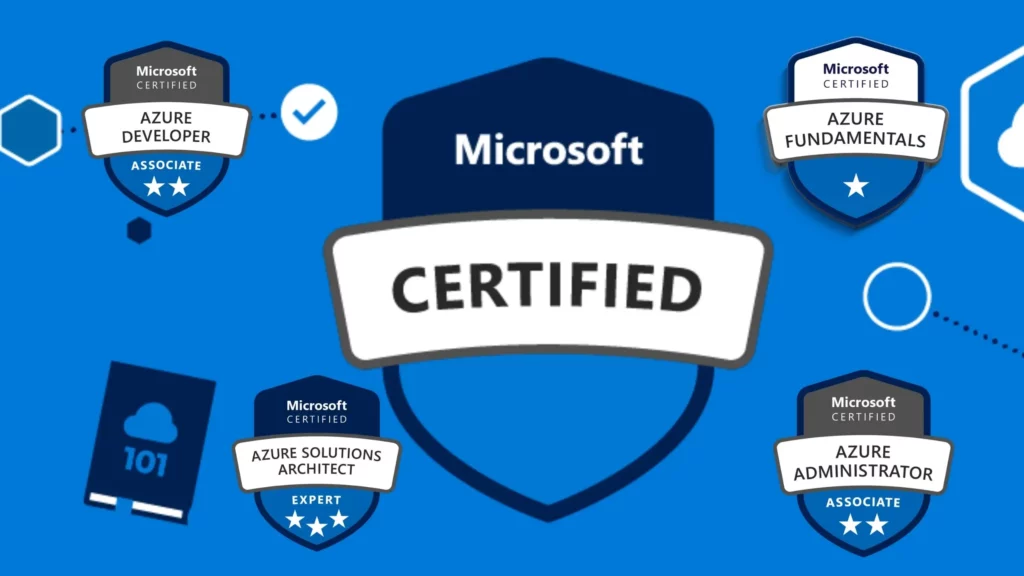
Complete Guide to Microsoft Certifications: Career Paths, Exam Details, and Job Roles
One of the most well-known IT certifications in the world, Microsoft certifications attest to proficiency in cloud, security, productivity, and data platforms. Microsoft provides structured pathways for every stage of your career, whether you’re just starting out in tech or looking to advance.
Microsoft Certifications: What Are They?
Microsoft certifications are role-based credentials intended to verify practical proficiency with Microsoft technologies. They cover topics like Azure, Microsoft 365, security, data, AI, and more, and they range from basic (Fundamentals) to advanced (Expert).
Those with certifications can show employers that they have the skills necessary for the job and are frequently eligible for better-paying positions, promotions, or new career opportunities.
Core Certification Categories
Microsoft Azure
Cloud infrastructure, security, networking, and architecture are the main topics of Microsoft Azure certifications. Important certifications consist of:
- AZ-900: Foundations of Azure
- AZ-104: Associate Azure Administrator
- AZ-700: Azure Networking Design and Implementation
- AZ-305: Expert in Azure Solutions Architecture
Microsoft 365
IT professionals who use Office 365, Teams, Exchange, and other collaboration tools will benefit greatly from Microsoft 365 certifications.
- MS-900: Foundations of Microsoft 365
- MS-102: Administrator for Microsoft 365
- MS-721: Systems Engineer for Collaboration and Communications
Security
Cloud security, identity protection, and compliance are all covered by security-focused certifications.
- SC-900: Foundations of Security, Compliance, and Identity
- SC-200: Security Operations Analyst for Microsoft
- SC-300: Administrator of Identity and Access
- SC-400: Administrator of Information Protection
Power Platform
Low-code/no-code tools for creating apps and automations are the main focus of these certifications.
- PL-900: Foundations of Power Platforms
- PL-100: App Maker for Power Platform
- PL-400: Developer of Power Platform
AI and Data
Additionally, Microsoft provides certifications for AI development and data platform work.
- DP-900: Foundations of Azure Data
- DP-300: Administrator of Azure Database
- AI-102: Associate Azure AI Engineer
Levels of Certification
The Microsoft certifications are arranged according to job readiness and level of difficulty:
🔹 Foundations (Start)
Experience is not necessary.
Excellent for non-technical roles, career changers, and students
For instance, AZ-900, MS-900, and SC-900
🔹 Associate (Intermediate)
For experts with at least one year of experience
Verifies job-role competencies
For instance, AZ-104, MS-102, SC-200, and PL-100
🔹 Expert (Advanced)
For engineers, architects, or senior professionals
requires extensive technical understanding.
Examples include MS-102 (when paired with a prerequisite) and AZ-305.
Linking Certifications to Positions
The following describes how some of the most well-liked certifications relate to actual jobs:
| Job Role | Suggested Certification(s) |
|---|---|
| Cloud Administrator | AZ-104 |
| Cloud Solutions Architect | AZ-305, AZ-700 |
| Cybersecurity Analyst | SC-200, SC-300 |
| Microsoft 365 Administrator | MS-102 |
| Identity & Access Engineer | SC-300 |
| Data Analyst | DP-900, DP-300 |
| Power Platform Developer | PL-400 |
| Entry-Level IT Support | AZ-900, MS-900, SC-900 |
Frequently Asked Questions
How long does it take to earn a Microsoft certification?
- Fundamentals: ~1–2 weeks of study
- Associate: ~3–6 weeks depending on experience
- Expert: ~2–3 months of preparation
Are Microsoft certifications still worth it?
Yes. Certifications signal verified skills to employers, often helping candidates land interviews, promotions, or salary increases. Microsoft is still a global leader in enterprise cloud and productivity solutions.
What order should I take the exams in?
Start with a Fundamentals exam (AZ-900, MS-900, or SC-900), then choose an Associate-level certification based on your career path. Expert-level exams typically require prior certification or deeper experience.