



Splunk describes its Core Certified User exam as an optional entry point to its certification program, and that one word is the most useful thing to know before you choose. Core Certified Power User is the certification the rest of the Splunk track builds on. Splunk’s own training FAQ says that if your certifications lapse, you restart the program at the Power User level, not at User. For anyone who already writes searches at work, start with Power User.
Core Certified User still earns its place for one group: people who have never opened Splunk. It costs the same $130, runs the same hour, and covers the search fundamentals that Power User quietly assumes you already have. Below is how the two exams compare as of late October 2026, what each one really tests, and how to decide which to sit first.
If Splunk were a library, Core Certified User would prove you can find any book in the catalog, and Power User would prove you can be the librarian who decides how the catalog gets labeled in the first place.
What Is the Difference Between Splunk Core Certified User and Power User?
Both exams are entry level, neither has a prerequisite, both cost $130 per attempt, and both are delivered through Pearson VUE. The difference is what you’re asked to do with Splunk. Core Certified User tests whether you can search, use fields, run basic statistics, and build simple reports, dashboards, lookups, and alerts. Power User tests whether you can create the knowledge objects that make data easier for everyone else to search, including field extractions, aliases, calculated fields, tags, event types, macros, workflow actions, and data models.
| Core Certified User | Core Certified Power User | |
|---|---|---|
| Splunk’s description | Optional entry point | Gateway to true Splunk expertise |
| Prerequisites | None | None |
| Questions | 60 | 65 |
| Time | 60 minutes, including 3 for the exam agreement | 60 minutes, including 3 for the exam agreement |
| Price | $130 per attempt | $130 per attempt |
| Heaviest topics | Basic Searching (22%), Using Fields (20%) | Correlating Events (15%) |
| Core skill | Finding and reporting on data | Shaping data with knowledge objects |
| Best fit | Brand new to Splunk, career changers | Analysts and admins who use Splunk at work |
Look closely at the question counts. Power User puts five more questions into the same window. After the three minutes Splunk sets aside for the certification agreement, you have about 57 seconds per question on User and about 53 on Power User. Four seconds sounds trivial until a question asks what a search returns and you need to trace it pipe by pipe.
One housekeeping change worth knowing before you register. On October 20, 2026, Splunk moved exam registration, exam history, and support into Cisco’s certification tracking system, and Splunk IDs were retired. You now log in with the email address tied to your certifications. The exam names, formats, the $130 price, and the three year validity did not change, so nothing in the table above moved.
What Does the Splunk Core Certified User Exam Cover?
The Core Certified User blueprint splits into eight topics. Basic Searching carries 22 percent and Using Fields in Searches carries 20, so close to half the exam is about finding events and working with the fields inside them. Search Language Fundamentals and Using Basic Transforming Commands sit at 15 percent each, Creating Reports and Dashboards at 12, Creating and Using Lookups at 6, and Splunk Basics and Creating Scheduled Reports and Alerts at 5 each.
The concept that matters most is the search pipeline. Every pipe character hands the results of one command to the next, the way an assembly line passes a part to the next station. A search that starts with an index and a time range pulls events, a stats command counts them, and a sort puts the counts in order. Candidates who memorize commands one at a time tend to struggle here. Learners who can read a search left to right and say what each station hands to the next handle almost anything the exam puts in front of them.
Study tip: Take any search you write in practice and read it aloud one pipe at a time, saying what goes in and what comes out at each step. If you can’t describe the handoff, you don’t understand the search yet, and that is exactly the kind of question the exam likes to ask.
What Does the Splunk Power User Exam Cover?
The Power User blueprint has ten topics. Correlating Events is the largest at 15 percent and Using Transforming Commands for Visualizations is the smallest at 5. The remaining eight sit at 10 percent each. They cover filtering and formatting results with eval, search, where, and fillnull, then field extractions, field aliases and calculated fields, tags and event types, macros, workflow actions, data models, and the Common Information Model add-on.
Moving from User to Power User means moving from asking Splunk questions to teaching Splunk vocabulary. Consider two firewalls that log the same thing under different names, one calling it src_ip and the other source_address. A field alias tells Splunk those mean the same thing, so one search covers both. Calculated fields add a value Splunk works out every time, such as converting bytes to megabytes. Tags and event types give a group of events a name people can search for. A macro saves a long piece of search logic under a short name, with arguments when you need them. The Common Information Model stretches that idea across your whole environment, normalizing data so dashboards and apps built for the CIM work regardless of which vendor produced the log. None of these objects is hard on its own, and the exam knows it, so the questions focus on which object solves which problem.
One objective deserves extra attention. Blueprint item 3.6 asks you to determine when to use transactions versus stats. The transaction command groups related events and can respect time spans and start and end markers, but it’s expensive to run. By contrast, stats is usually faster and should be your default whenever a shared field is enough to group events. Expect scenarios built to see whether you reach for the right one.
Should You Take Splunk Core Certified User First?
Take Core Certified User first if you’ve never used Splunk, you’re moving into a SOC or IT operations role from another field, or you want a lower stakes first exam to get comfortable with the Pearson VUE format. You get a credential while you build toward Power User, and the material is the foundation Power User expects anyway.
Skip it if you already search Splunk regularly at work. Power User doesn’t test basic searching directly, but every Power User question assumes you can do it, so preparing properly for Power User covers that ground on its own. Spending $130 and a study cycle to prove something the next exam takes for granted is rarely the best use of your time.
The lapse rule settles it for most people. According to the Splunk training FAQ, Splunk certifications run on a three year life cycle from the date of the highest exam you’ve passed, and if you let them lapse you restart at Power User. Splunk is telling you which credential it treats as the real starting line.
Teams buying several exams should know that Splunk also lists a Pearson VUE voucher option of five exams for $500, which brings each attempt down to $100.
How Should You Study for the Splunk Power User Exam?
Build every knowledge object on the blueprint with your own hands at least once. Reading about a macro and creating one with arguments are different skills, and the exam rewards the second. Splunk offers free self-paced eLearning that covers a good share of the fundamentals, and a trial copy of Splunk Enterprise on a laptop gives you somewhere to practice with sample data.
One practice loop works well for most learners. Extract a field with the Field Extractor, give it an alias, write a calculated field that uses it, tag the events, save the search logic as a macro, and then build a small data model on top of all of it. When you can run that sequence without notes, you’ve touched most of what the exam expects you to recognize.
If you learn better in a classroom, Training Camp runs a four day live online Splunk Boot Camp built around the Power User curriculum: working with time, statistical processing, correlation analysis, knowledge objects, field extractions, and data models. You register for the exam separately through Cisco’s CertMetrics, and Pearson VUE delivers it.
Where Does Splunk Fit in a SOC Analyst Career?
Splunk certifications are vendor specific, which is both their strength and their limit. They prove you can work inside one of the SIEM platforms security teams rely on every day. Our look at what a SOC analyst actually does all day shows how much of that job happens in a search bar. What they don’t prove is that you understand threats, incident response, or log analysis in general.
That gap is why Splunk pairs well with a vendor neutral analyst certification. CompTIA CySA+ covers the analysis side, and our comparison of CySA+ and SecAI+ as next steps after Security+ walks through where it fits. An analyst who can explain what a suspicious login pattern means and then write the Splunk search that finds it covers both halves of the work.
Frequently Asked Questions
Do I need Splunk Core Certified User before Power User?
No. Splunk lists no prerequisite exam for Core Certified Power User, and it describes Core Certified User as an optional entry point for people with little or no Splunk experience.
How much do the Splunk Core Certified User and Power User exams cost?
Each exam costs $130 per attempt through Pearson VUE. Splunk also lists a voucher option of five exams for $500, which lowers the cost to $100 per attempt for teams or repeat test takers.
How many questions are on the Splunk Power User exam?
The Splunk Core Certified Power User exam has 65 multiple choice questions in 60 minutes, and that hour includes three minutes to review and accept the exam agreement.
How long are Splunk certifications valid?
Splunk certifications follow a three year life cycle from the date of the highest certification exam you passed. If they lapse, you restart the program at the Core Certified Power User level.
What is the Splunk exam retake policy?
If you fail on your first attempt, you wait seven days before retaking the exam, and later retakes require longer waits. Splunk reserves the right to deny a retake beyond the sixth attempt.
Which Splunk certification is better for a SOC analyst?
Core Certified Power User is the better fit for a SOC analyst who already uses Splunk, because it covers correlating events, field extractions, and the Common Information Model that security content depends on.
What comes after Splunk Core Certified Power User?
Splunk points Power Users toward Core Certified Advanced Power User, Splunk Enterprise Certified Admin, and Splunk Cloud Certified Admin, depending on whether you want to go deeper on search or into administration.
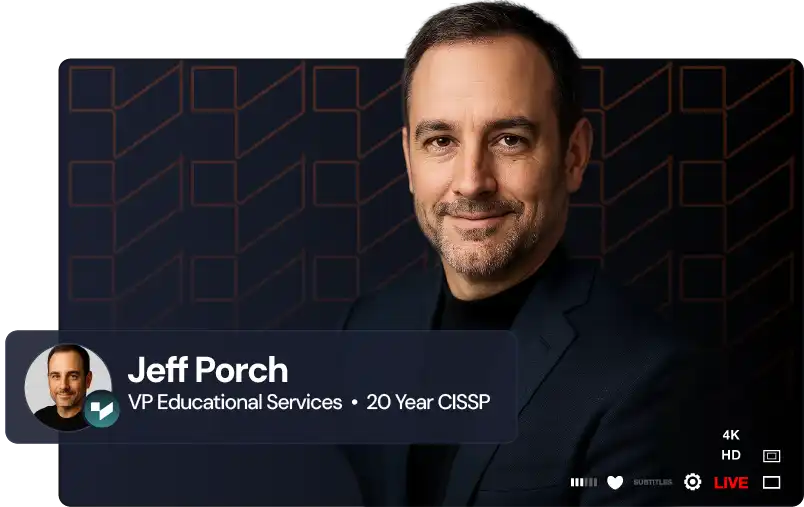
VP of Educational Services | Training Camp
Jeff Porch is the VP of Educational Services and Operations at Training Camp, where he leads the company's educational initiatives with a focus on accelerated learning and student success. Beyond overseeing curriculum development, Jeff serves as the lead course designer for Training Camp's CompTIA Security+ program, one of their most popular offerings. He is deeply involved in the instructional side of the business — developing certification courses, training instructors, and ensuring that complex IT concepts are delivered in ways that maximize retention and minimize time-to-certification.