


What Is IPPD? Integrated Process and Product Development Explained
<div style=”max-width: 1400px; margin: 0 auto; padding: 2rem 1.5rem;”><article style=”max-width: 1400px; margin: 0 auto; background: white; padding: 4rem 3rem; border-radius: 1.5rem; box-shadow: 0 25px 50px -12px rgba(0,0,0,0.25); position: relative;”>
<div style=”position: absolute; top: 0; left: 0; right: 0; height: 6px; background: linear-gradient(to right, #366269, #5E8B87, #FF6019); border-radius: 1.5rem 1.5rem 0 0;”></div>
<p style=”font-size: 1.2rem; line-height: 1.8; color: #475569; margin-bottom: 2rem; font-family: ‘Inter’, -apple-system, BlinkMacSystemFont, ‘Segoe UI’, Roboto, sans-serif;”>If you’ve spent any time working with defense contractors, government agencies, or large systems engineering programs, you’ve probably heard the acronym IPPD tossed around in meetings. Integrated Process and Product Development. It sounds like something dreamed up by a committee that really loves acronyms, and honestly, it kind of was. But here’s the thing: once you strip away the bureaucratic packaging, IPPD is one of the smartest frameworks ever created for building complex systems that actually work. And if you’re in cybersecurity or IT today, the principles behind IPPD are quietly shaping everything from how we design secure networks to how modern DevSecOps pipelines operate.</p>
<p style=”font-size: 1.2rem; line-height: 1.8; color: #475569; margin-bottom: 2rem; font-family: ‘Inter’, -apple-system, BlinkMacSystemFont, ‘Segoe UI’, Roboto, sans-serif;”>I’ve worked with Fortune 500 companies and defense organizations that treat IPPD like gospel, and I’ve also watched teams completely ignore it and pay the price later. Whether someone thought about process and product at the same time, instead of just bolting the process on as an afterthought, can make the difference between a project that stays on track and one that spirals into chaos. That’s IPPD in a nutshell. But there’s a lot more to it than that, and if you’re studying for <a style=”color: #ff6019; text-decoration: none; border-bottom: 2px solid #FF6019;” href=”https://trainingcamp.com/articles/what-cybersecurity-certifications-do-government-contractors-actually-require/”>government or defense focused certifications</a>, understanding IPPD will give you a real edge over candidates who only know the textbook definition.</p>
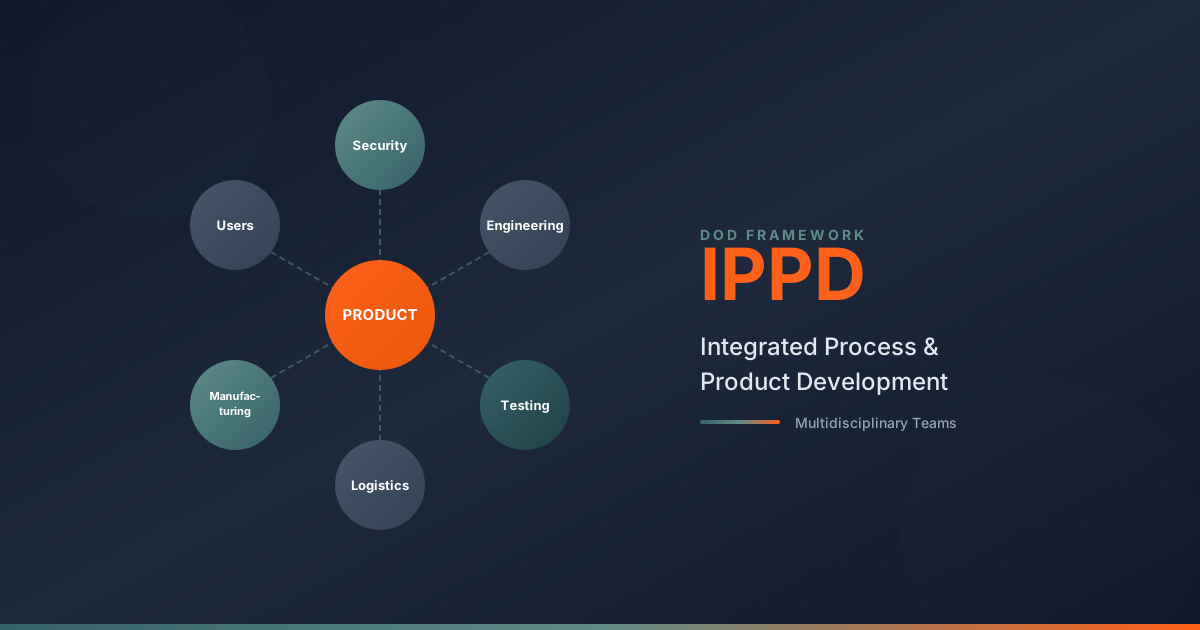
<p style=”font-size: 1.35rem; line-height: 1.8; font-weight: 600; color: #20373f; margin: 2rem 0; padding: 1.5rem; background: linear-gradient(135deg, #D7E0E1, #f8fafc); border-left: 4px solid #FF6019; border-radius: 0.5rem; font-family: ‘Inter’, -apple-system, BlinkMacSystemFont, ‘Segoe UI’, Roboto, sans-serif;”>IPPD is a management technique that simultaneously integrates all essential acquisition activities through multidisciplinary teams to optimize design, manufacturing, and supportability processes. In plain English: get everyone in the room early, build the thing and the process for building it at the same time, and stop pretending security is somebody else’s problem.</p>
<h2 style=”font-size: clamp(1.75rem, 3vw, 2.25rem); font-weight: 800; color: #0f172a; margin: 4rem 0 2rem 0; line-height: 1.2; letter-spacing: -0.01em; display: flex; align-items: center; gap: 1rem; font-family: ‘Inter’, -apple-system, BlinkMacSystemFont, ‘Segoe UI’, Roboto, sans-serif;”>
What IPPD Actually Means (Without the Jargon)</h2>
<p style=”font-size: 1.125rem; line-height: 1.8; color: #475569; margin-bottom: 1.5rem; font-family: ‘Inter’, -apple-system, BlinkMacSystemFont, ‘Segoe UI’, Roboto, sans-serif;”>At its core, Integrated Process and Product Development is a management approach that says you shouldn’t design a product first and then figure out how to build, test, support, and secure it later. Instead, you develop the product and all its supporting processes at the same time, using teams that include people from every discipline that’ll touch the final result. Engineering, manufacturing, testing, logistics, security, finance, and the actual end users all sit at the same table from day one.</p>
<p style=”font-size: 1.125rem; line-height: 1.8; color: #475569; margin-bottom: 1.5rem; font-family: ‘Inter’, -apple-system, BlinkMacSystemFont, ‘Segoe UI’, Roboto, sans-serif;”>Think about it like building a house. The old way was for an architect to draw up beautiful plans, hand them to a builder, and then everyone discovers that the plumbing doesn’t fit, the electrical panel is in the wrong spot, and the HVAC system needs a wall moved. Expensive. Frustrating. Late. IPPD is the equivalent of putting the architect, plumber, electrician, HVAC engineer, and the family who’ll live there all in the same room from the first sketch. Problems get caught early when they’re cheap to fix, instead of late when they’re catastrophically expensive.</p>
<p style=”font-size: 1.125rem; line-height: 1.8; color: #475569; margin-bottom: 1.5rem; font-family: ‘Inter’, -apple-system, BlinkMacSystemFont, ‘Segoe UI’, Roboto, sans-serif;”>The Department of Defense formalized IPPD in the mid 1990s, though the concepts had been percolating in industry for over a decade before that. In May 1995, the Secretary of Defense directed what the official guidance called a fundamental change in the way the Department acquires goods and services, mandating that IPPD and Integrated Product Teams be applied throughout the acquisition process. The DoD published its first formal guide in February 1996, and an expanded handbook followed in August 1998. These documents became the foundation for how the U.S. military and its contractors develop everything from fighter jets to secure communications systems.</p>
<h2 style=”font-size: clamp(1.75rem, 3vw, 2.25rem); font-weight: 800; color: #0f172a; margin: 4rem 0 2rem 0; line-height: 1.2; letter-spacing: -0.01em; display: flex; align-items: center; gap: 1rem; font-family: ‘Inter’, -apple-system, BlinkMacSystemFont, ‘Segoe UI’, Roboto, sans-serif;”>
Where IPPD Came From and Why It Still Matters</h2>
<p style=”font-size: 1.125rem; line-height: 1.8; color: #475569; margin-bottom: 1.5rem; font-family: ‘Inter’, -apple-system, BlinkMacSystemFont, ‘Segoe UI’, Roboto, sans-serif;”>IPPD grew out of concurrent engineering, which emerged in the early 1980s as U.S. industries tried to compete with Japanese manufacturers who were eating their lunch on quality and speed. The auto industry got there first. Companies like Chrysler, Ford, and Toyota proved that developing products and manufacturing processes in parallel slashed development timelines and dramatically reduced costly rework. The defense industry took notice, and by the early 1990s, programs like Boeing’s 777 development became legendary examples of what integrated teams could pull off.</p>
<p style=”font-size: 1.125rem; line-height: 1.8; color: #475569; margin-bottom: 1.5rem; font-family: ‘Inter’, -apple-system, BlinkMacSystemFont, ‘Segoe UI’, Roboto, sans-serif;”>The results were hard to argue with. Defense programs that adopted IPPD reported 10 percent reductions in development costs, 50 percent reductions in engineering change proposals, and 40 percent reductions in manufacturing costs. One major Navy program following the Boeing 777 model saw reduced cycle times and development costs across the board. When the numbers look like that, even the most change resistant bureaucracies start paying attention.</p>
<p style=”font-size: 1.125rem; line-height: 1.8; color: #475569; margin-bottom: 1.5rem; font-family: ‘Inter’, -apple-system, BlinkMacSystemFont, ‘Segoe UI’, Roboto, sans-serif;”>But here’s what I find fascinating about IPPD in 2026. The framework is almost 30 years old in its formal DoD incarnation, but the principles have never been more relevant. Every time you hear someone talk about shifting security left, or building security into the development lifecycle, or using cross functional teams for DevSecOps, they’re essentially describing IPPD with a modern coat of paint. The vocabulary changed. The underlying wisdom didn’t.</p>
<h2 style=”font-size: clamp(1.75rem, 3vw, 2.25rem); font-weight: 800; color: #0f172a; margin: 4rem 0 2rem 0; line-height: 1.2; letter-spacing: -0.01em; display: flex; align-items: center; gap: 1rem; font-family: ‘Inter’, -apple-system, BlinkMacSystemFont, ‘Segoe UI’, Roboto, sans-serif;”>
The Ten Tenets of IPPD</h2>
<p style=”font-size: 1.125rem; line-height: 1.8; color: #475569; margin-bottom: 1.5rem; font-family: ‘Inter’, -apple-system, BlinkMacSystemFont, ‘Segoe UI’, Roboto, sans-serif;”>The DoD Guide to IPPD lays out ten tenets that serve as the operating principles for the entire approach. These aren’t abstract theory. They’re practical guidelines that shaped how billions of dollars in defense systems were developed. And if you spend a few minutes with them, you’ll see direct parallels to modern cybersecurity frameworks, agile methodologies, and systems security engineering practices.</p>
<div style=”background: linear-gradient(135deg, #f1f5f9, #f8fafc); border-left: 5px solid #5E8B87; border-radius: 0.75rem; padding: 2rem; margin: 2.5rem 0; box-shadow: 0 4px 6px -1px rgba(0,0,0,0.1);”>
<div style=”display: flex; align-items: center; gap: 0.75rem; margin-bottom: 1.5rem; color: #20373f; font-weight: 800; font-size: 0.95rem; text-transform: uppercase; letter-spacing: 1px; font-family: ‘Inter’, -apple-system, BlinkMacSystemFont, ‘Segoe UI’, Roboto, sans-serif;”><span style=”font-size: 1.2rem;”>📋</span> The Ten Tenets of IPPD</div>
<div style=”margin-bottom: 1.25rem; display: flex; align-items: flex-start; gap: 1rem;”><span style=”background: #366269; color: white; font-weight: 800; font-size: 0.75rem; padding: 0.5rem 0.75rem; border-radius: 6px; flex-shrink: 0; min-width: 60px; text-align: center; box-shadow: 0 1px 2px 0 rgba(0,0,0,0.05); font-family: ‘Inter’, -apple-system, BlinkMacSystemFont, ‘Segoe UI’, Roboto, sans-serif;”>1</span>
<div style=”flex: 1; color: #334155; line-height: 1.7; font-family: ‘Inter’, -apple-system, BlinkMacSystemFont, ‘Segoe UI’, Roboto, sans-serif;”><strong>Customer Focus.</strong> The primary objective is to satisfy the customer’s needs better, faster, and at less cost. The customer’s needs determine the nature of the product and its associated processes.</div>
</div>
<div style=”margin-bottom: 1.25rem; display: flex; align-items: flex-start; gap: 1rem;”><span style=”background: #366269; color: white; font-weight: 800; font-size: 0.75rem; padding: 0.5rem 0.75rem; border-radius: 6px; flex-shrink: 0; min-width: 60px; text-align: center; box-shadow: 0 1px 2px 0 rgba(0,0,0,0.05); font-family: ‘Inter’, -apple-system, BlinkMacSystemFont, ‘Segoe UI’, Roboto, sans-serif;”>2</span>
<div style=”flex: 1; color: #334155; line-height: 1.7; font-family: ‘Inter’, -apple-system, BlinkMacSystemFont, ‘Segoe UI’, Roboto, sans-serif;”><strong>Concurrent Development of Products and Processes.</strong> Processes should be developed at the same time as the products they support. You can’t design first and figure out manufacturing, testing, and support later.</div>
</div>
<div style=”margin-bottom: 1.25rem; display: flex; align-items: flex-start; gap: 1rem;”><span style=”background: #366269; color: white; font-weight: 800; font-size: 0.75rem; padding: 0.5rem 0.75rem; border-radius: 6px; flex-shrink: 0; min-width: 60px; text-align: center; box-shadow: 0 1px 2px 0 rgba(0,0,0,0.05); font-family: ‘Inter’, -apple-system, BlinkMacSystemFont, ‘Segoe UI’, Roboto, sans-serif;”>3</span>
<div style=”flex: 1; color: #334155; line-height: 1.7; font-family: ‘Inter’, -apple-system, BlinkMacSystemFont, ‘Segoe UI’, Roboto, sans-serif;”><strong>Early and Continuous Life Cycle Planning.</strong> Planning should begin in the earliest phases and extend throughout the entire product life cycle, from concept through eventual disposal.</div>
</div>
<div style=”margin-bottom: 1.25rem; display: flex; align-items: flex-start; gap: 1rem;”><span style=”background: #366269; color: white; font-weight: 800; font-size: 0.75rem; padding: 0.5rem 0.75rem; border-radius: 6px; flex-shrink: 0; min-width: 60px; text-align: center; box-shadow: 0 1px 2px 0 rgba(0,0,0,0.05); font-family: ‘Inter’, -apple-system, BlinkMacSystemFont, ‘Segoe UI’, Roboto, sans-serif;”>4</span>
<div style=”flex: 1; color: #334155; line-height: 1.7; font-family: ‘Inter’, -apple-system, BlinkMacSystemFont, ‘Segoe UI’, Roboto, sans-serif;”><strong>Maximize Flexibility for Optimization.</strong> IPPD is a management approach, not a rigid set of steps. Allow contractors and teams the flexibility to use innovative, streamlined best practices.</div>
</div>
<div style=”margin-bottom: 1.25rem; display: flex; align-items: flex-start; gap: 1rem;”><span style=”background: #366269; color: white; font-weight: 800; font-size: 0.75rem; padding: 0.5rem 0.75rem; border-radius: 6px; flex-shrink: 0; min-width: 60px; text-align: center; box-shadow: 0 1px 2px 0 rgba(0,0,0,0.05); font-family: ‘Inter’, -apple-system, BlinkMacSystemFont, ‘Segoe UI’, Roboto, sans-serif;”>5</span>
<div style=”flex: 1; color: #334155; line-height: 1.7; font-family: ‘Inter’, -apple-system, BlinkMacSystemFont, ‘Segoe UI’, Roboto, sans-serif;”><strong>Encourage Robust Design and Improved Process Capability.</strong> Products should be designed to perform well under a range of conditions, not just the ideal lab scenario.</div>
</div>
<div style=”margin-bottom: 1.25rem; display: flex; align-items: flex-start; gap: 1rem;”><span style=”background: #366269; color: white; font-weight: 800; font-size: 0.75rem; padding: 0.5rem 0.75rem; border-radius: 6px; flex-shrink: 0; min-width: 60px; text-align: center; box-shadow: 0 1px 2px 0 rgba(0,0,0,0.05); font-family: ‘Inter’, -apple-system, BlinkMacSystemFont, ‘Segoe UI’, Roboto, sans-serif;”>6</span>
<div style=”flex: 1; color: #334155; line-height: 1.7; font-family: ‘Inter’, -apple-system, BlinkMacSystemFont, ‘Segoe UI’, Roboto, sans-serif;”><strong>Event Driven Scheduling.</strong> Progress is measured by demonstrated accomplishments, not calendar dates. An event is complete only when its criteria are actually met.</div>
</div>
<div style=”margin-bottom: 1.25rem; display: flex; align-items: flex-start; gap: 1rem;”><span style=”background: #366269; color: white; font-weight: 800; font-size: 0.75rem; padding: 0.5rem 0.75rem; border-radius: 6px; flex-shrink: 0; min-width: 60px; text-align: center; box-shadow: 0 1px 2px 0 rgba(0,0,0,0.05); font-family: ‘Inter’, -apple-system, BlinkMacSystemFont, ‘Segoe UI’, Roboto, sans-serif;”>7</span>
<div style=”flex: 1; color: #334155; line-height: 1.7; font-family: ‘Inter’, -apple-system, BlinkMacSystemFont, ‘Segoe UI’, Roboto, sans-serif;”><strong>Multidisciplinary Teamwork.</strong> The right people at the right place at the right time. Team decisions should be based on combined input from engineering, manufacturing, test, logistics, finance, contracting, customers, and suppliers.</div>
</div>
<div style=”margin-bottom: 1.25rem; display: flex; align-items: flex-start; gap: 1rem;”><span style=”background: #366269; color: white; font-weight: 800; font-size: 0.75rem; padding: 0.5rem 0.75rem; border-radius: 6px; flex-shrink: 0; min-width: 60px; text-align: center; box-shadow: 0 1px 2px 0 rgba(0,0,0,0.05); font-family: ‘Inter’, -apple-system, BlinkMacSystemFont, ‘Segoe UI’, Roboto, sans-serif;”>8</span>
<div style=”flex: 1; color: #334155; line-height: 1.7; font-family: ‘Inter’, -apple-system, BlinkMacSystemFont, ‘Segoe UI’, Roboto, sans-serif;”><strong>Empowerment.</strong> Teams should be given authority, responsibility, and resources to manage their product. They should accept accountability for the results of their effort.</div>
</div>
<div style=”margin-bottom: 1.25rem; display: flex; align-items: flex-start; gap: 1rem;”><span style=”background: #366269; color: white; font-weight: 800; font-size: 0.75rem; padding: 0.5rem 0.75rem; border-radius: 6px; flex-shrink: 0; min-width: 60px; text-align: center; box-shadow: 0 1px 2px 0 rgba(0,0,0,0.05); font-family: ‘Inter’, -apple-system, BlinkMacSystemFont, ‘Segoe UI’, Roboto, sans-serif;”>9</span>
<div style=”flex: 1; color: #334155; line-height: 1.7; font-family: ‘Inter’, -apple-system, BlinkMacSystemFont, ‘Segoe UI’, Roboto, sans-serif;”><strong>Seamless Management Tools.</strong> A single integrated management system should relate requirements, planning, resource allocation, execution, and tracking over the product’s entire life cycle.</div>
</div>
<div style=”margin-bottom: 0; display: flex; align-items: flex-start; gap: 1rem;”><span style=”background: #366269; color: white; font-weight: 800; font-size: 0.75rem; padding: 0.5rem 0.75rem; border-radius: 6px; flex-shrink: 0; min-width: 60px; text-align: center; box-shadow: 0 1px 2px 0 rgba(0,0,0,0.05); font-family: ‘Inter’, -apple-system, BlinkMacSystemFont, ‘Segoe UI’, Roboto, sans-serif;”>10</span>
<div style=”flex: 1; color: #334155; line-height: 1.7; font-family: ‘Inter’, -apple-system, BlinkMacSystemFont, ‘Segoe UI’, Roboto, sans-serif;”><strong>Proactive Identification and Management of Risk.</strong> Risk management should be forward looking, structured, and continuous. Early planning and aggressive execution are the keys.</div>
</div>
</div>
<p style=”font-size: 1.125rem; line-height: 1.8; color: #475569; margin-bottom: 1.5rem; font-family: ‘Inter’, -apple-system, BlinkMacSystemFont, ‘Segoe UI’, Roboto, sans-serif;”>If you read through that list and thought, “Wait, that just sounds like good project management,” you’re absolutely right. The genius of IPPD isn’t that any single tenet is revolutionary on its own. It’s that the framework insists on applying all of them simultaneously, from the very beginning of a program, with actual enforcement mechanisms. Most organizations already agree with these principles in theory. IPPD forces you to actually do them in practice.</p>
<h2 style=”font-size: clamp(1.75rem, 3vw, 2.25rem); font-weight: 800; color: #0f172a; margin: 4rem 0 2rem 0; line-height: 1.2; letter-spacing: -0.01em; display: flex; align-items: center; gap: 1rem; font-family: ‘Inter’, -apple-system, BlinkMacSystemFont, ‘Segoe UI’, Roboto, sans-serif;”>
Integrated Product Teams: The Engine That Makes IPPD Work</h2>
<p style=”font-size: 1.125rem; line-height: 1.8; color: #475569; margin-bottom: 1.5rem; font-family: ‘Inter’, -apple-system, BlinkMacSystemFont, ‘Segoe UI’, Roboto, sans-serif;”>You can’t talk about IPPD without talking about Integrated Product Teams, or IPTs. These are the organizational mechanism that brings the whole framework to life. An IPT is a multidisciplinary group made up of representatives from every relevant functional area, all working together to build a successful program, identify issues, and make timely recommendations.</p>
<p style=”font-size: 1.125rem; line-height: 1.8; color: #475569; margin-bottom: 1.5rem; font-family: ‘Inter’, -apple-system, BlinkMacSystemFont, ‘Segoe UI’, Roboto, sans-serif;”>The emphasis is on involvement. Users, customers, management, developers, contractors, security engineers, testers, logistics specialists. Everyone who has a stake in the outcome gets a seat. This isn’t a “we’ll loop you in when we need you” arrangement. It’s a “you’re here every day, your input shapes every decision” commitment. I’ve seen defense programs where the IPT included over a dozen different specialties meeting weekly, and the ones that took the model seriously consistently outperformed programs where teams operated in silos and just tossed work over the wall to each other.</p>
<p style=”font-size: 1.125rem; line-height: 1.8; color: #475569; margin-bottom: 1.5rem; font-family: ‘Inter’, -apple-system, BlinkMacSystemFont, ‘Segoe UI’, Roboto, sans-serif;”>Here’s where it gets interesting for cybersecurity professionals. One of the biggest historical failures in system development has been treating security as a bolt on activity. Build the system, then call in the security team to assess it, then scramble to patch whatever they find. IPPD eliminates that pattern by putting security at the table from the beginning. When security engineers participate in an IPT from concept through production, they catch vulnerabilities during design rather than discovering them during testing or, worse, after deployment.</p>
<div style=”margin: 2rem 0; padding: 1.5rem; background: linear-gradient(135deg, #f8fafc, #f1f5f9); border-radius: 1rem; border-left: 5px solid #5E8B87;”>
<p style=”color: #334155; font-size: 1.05rem; line-height: 1.7; margin-bottom: 0; font-family: ‘Inter’, -apple-system, BlinkMacSystemFont, ‘Segoe UI’, Roboto, sans-serif;”>I like to compare IPTs to a good kitchen crew. In a well run restaurant, the sous chef isn’t waiting until the entree is plated to check seasoning. The pastry chef isn’t surprised by the dessert order. Everyone knows the menu, everyone preps in parallel, and the head chef coordinates timing so everything comes together. Now imagine running that kitchen where nobody talks to each other until their individual dish is done, and then they try to assemble a coherent meal at the last minute. That’s what systems development without IPPD looks like. And yet, a shocking number of organizations still operate that way.</p>
</div>
<h2 style=”font-size: clamp(1.75rem, 3vw, 2.25rem); font-weight: 800; color: #0f172a; margin: 4rem 0 2rem 0; line-height: 1.2; letter-spacing: -0.01em; display: flex; align-items: center; gap: 1rem; font-family: ‘Inter’, -apple-system, BlinkMacSystemFont, ‘Segoe UI’, Roboto, sans-serif;”>
Why Cybersecurity Professionals Should Care About IPPD</h2>
<p style=”font-size: 1.125rem; line-height: 1.8; color: #475569; margin-bottom: 1.5rem; font-family: ‘Inter’, -apple-system, BlinkMacSystemFont, ‘Segoe UI’, Roboto, sans-serif;”>You might be reading this and thinking, “Okay Mike, but I’m a security analyst, not an aerospace engineer. Why should I care about a DoD acquisition framework from the 1990s?” Fair question. The answer is that IPPD principles have been baked into the modern security frameworks and standards you’re already working with, whether you realize it or not.</p>
<p style=”font-size: 1.125rem; line-height: 1.8; color: #475569; margin-bottom: 1.5rem; font-family: ‘Inter’, -apple-system, BlinkMacSystemFont, ‘Segoe UI’, Roboto, sans-serif;”>NIST Special Publication 800-160, which covers systems security engineering, is essentially a cybersecurity translation of IPPD principles. It advocates for a multidisciplinary approach to engineering trustworthy secure systems, integrating security considerations throughout the entire system life cycle. The document explicitly references ISO/IEC/IEEE 15288, the same systems engineering standard that IPPD helped shape. When NIST says security should be engineered into systems rather than tested in after the fact, they’re channeling the concurrent development tenet that IPPD established decades ago.</p>
<p style=”font-size: 1.125rem; line-height: 1.8; color: #475569; margin-bottom: 1.5rem; font-family: ‘Inter’, -apple-system, BlinkMacSystemFont, ‘Segoe UI’, Roboto, sans-serif;”>DevSecOps is another direct descendant. The entire philosophy of integrating security into the DevOps pipeline from day one, rather than tacking it on at the end, mirrors IPPD’s insistence on concurrent development. The shift left movement in software security is really just IPPD’s third tenet, early and continuous life cycle planning, applied to application development. Even the organizational structure of DevSecOps teams, with embedded security engineers working alongside developers and operations staff, looks remarkably like an Integrated Product Team from the 1996 DoD guide.</p>
<p style=”font-size: 1.125rem; line-height: 1.8; color: #475569; margin-bottom: 1.5rem; font-family: ‘Inter’, -apple-system, BlinkMacSystemFont, ‘Segoe UI’, Roboto, sans-serif;”>If you’re working in or with the defense sector, understanding IPPD becomes even more critical. Programs operating under <a style=”color: #ff6019; text-decoration: none; border-bottom: 2px solid #FF6019;” href=”https://trainingcamp.com/articles/cmmc-explained-what-defense-contractors-need-to-know/”>CMMC requirements</a> or DoD acquisition regulations will reference IPPD concepts directly. Contractors responding to RFPs for defense programs need to demonstrate that their development approach aligns with IPPD principles. Security professionals supporting these contracts need to understand how their work fits into the broader integrated development framework.</p>
<h2 style=”font-size: clamp(1.75rem, 3vw, 2.25rem); font-weight: 800; color: #0f172a; margin: 4rem 0 2rem 0; line-height: 1.2; letter-spacing: -0.01em; display: flex; align-items: center; gap: 1rem; font-family: ‘Inter’, -apple-system, BlinkMacSystemFont, ‘Segoe UI’, Roboto, sans-serif;”>
IPPD in Practice: What It Looks Like on Real Programs</h2>
<p style=”font-size: 1.125rem; line-height: 1.8; color: #475569; margin-bottom: 1.5rem; font-family: ‘Inter’, -apple-system, BlinkMacSystemFont, ‘Segoe UI’, Roboto, sans-serif;”>Theory is great, but what does IPPD actually look like when organizations implement it? Let me walk through what I’ve seen on programs that do it well, because the implementation details matter a lot more than the glossary definitions.</p>
<p style=”font-size: 1.125rem; line-height: 1.8; color: #475569; margin-bottom: 1.5rem; font-family: ‘Inter’, -apple-system, BlinkMacSystemFont, ‘Segoe UI’, Roboto, sans-serif;”>First, the program establishes its IPT structure during the earliest concept phase. This isn’t an afterthought. Before a single line of code is written or a single component is designed, the program identifies all stakeholders and creates teams that include representatives from each discipline. For a secure communications system, that IPT might include software engineers, hardware engineers, a cybersecurity architect, a test engineer, a logistics specialist, a manufacturing representative, a cost analyst, and an actual end user from the military unit that’ll operate the system.</p>
<p style=”font-size: 1.125rem; line-height: 1.8; color: #475569; margin-bottom: 1.5rem; font-family: ‘Inter’, -apple-system, BlinkMacSystemFont, ‘Segoe UI’, Roboto, sans-serif;”>Second, the team develops an Integrated Master Plan and Integrated Master Schedule that tie specific events to accomplishment criteria. This is the event driven scheduling tenet in action. Instead of saying “complete Phase 2 by March 15,” the schedule says “Phase 2 is complete when all subsystem interfaces have been tested and verified against the interface control document.” If the accomplishment criteria aren’t met, the event isn’t complete. Calendar dates are targets, but demonstrated maturity is the gatekeeper.</p>
<p style=”font-size: 1.125rem; line-height: 1.8; color: #475569; margin-bottom: 1.5rem; font-family: ‘Inter’, -apple-system, BlinkMacSystemFont, ‘Segoe UI’, Roboto, sans-serif;”>Third, trade studies happen continuously throughout development. The security engineer isn’t just reviewing designs after the fact. They’re participating in real time trade off analyses where security requirements are weighed against cost, performance, schedule, and supportability. Maybe a particular encryption implementation adds latency that the system can’t tolerate. The IPT works through alternatives together, finding a solution that balances security with operational performance, rather than having security impose requirements that engineering discovers too late to accommodate.</p>
<div style=”background: linear-gradient(135deg, #f0f9ff, #e0f2fe); border-radius: 1rem; padding: 2rem; margin: 1.5rem 0;”>
<p style=”color: #334155; font-size: 1.05rem; line-height: 1.7; margin-bottom: 0; font-family: ‘Inter’, -apple-system, BlinkMacSystemFont, ‘Segoe UI’, Roboto, sans-serif;”><strong style=”color: #366269;”>Real world example:</strong> I worked with a defense contractor years ago that was developing a tactical data system. Their security team discovered during an IPT review that the planned authentication mechanism wouldn’t work in the field environment because of intermittent connectivity. Because security was at the table during the architecture phase, they redesigned the authentication approach before a single line of code was written. The program manager estimated that catching this issue early saved four months of schedule and over $2 million in rework. That’s IPPD doing what it’s supposed to do.</p>
</div>
<h2 style=”font-size: clamp(1.75rem, 3vw, 2.25rem); font-weight: 800; color: #0f172a; margin: 4rem 0 2rem 0; line-height: 1.2; letter-spacing: -0.01em; display: flex; align-items: center; gap: 1rem; font-family: ‘Inter’, -apple-system, BlinkMacSystemFont, ‘Segoe UI’, Roboto, sans-serif;”>
The Five Principles That Simplify the Ten Tenets</h2>
<p style=”font-size: 1.125rem; line-height: 1.8; color: #475569; margin-bottom: 1.5rem; font-family: ‘Inter’, -apple-system, BlinkMacSystemFont, ‘Segoe UI’, Roboto, sans-serif;”>If ten tenets feel like a lot to remember, the DoD Handbook helpfully groups them into five overarching principles. These are easier to internalize and apply, whether you’re studying for an exam or trying to improve how your organization develops systems.</p>
<p style=”font-size: 1.125rem; line-height: 1.8; color: #475569; margin-bottom: 1.5rem; font-family: ‘Inter’, -apple-system, BlinkMacSystemFont, ‘Segoe UI’, Roboto, sans-serif;”><strong style=”color: #0f172a; font-weight: 700;”>Customer Focus</strong> keeps the entire effort pointed at the right target. It’s accomplished by including the customer in decision making, placing them on multidisciplinary teams, and conducting trade off studies during requirements definition. A specific process called Cost as an Independent Variable, or CAIV, ensures that design remains consistent with what the customer actually needs versus what engineers think would be technically cool.</p>
<p style=”font-size: 1.125rem; line-height: 1.8; color: #475569; margin-bottom: 1.5rem; font-family: ‘Inter’, -apple-system, BlinkMacSystemFont, ‘Segoe UI’, Roboto, sans-serif;”><strong style=”color: #0f172a; font-weight: 700;”>Concurrent Development of Products and Processes</strong> is the core mechanism. This means developing the manufacturing process, the test process, the support process, and the training process simultaneously with the product itself. In cybersecurity terms, this translates directly to developing security controls, monitoring capabilities, incident response procedures, and user training alongside the system being built.</p>
<p style=”font-size: 1.125rem; line-height: 1.8; color: #475569; margin-bottom: 1.5rem; font-family: ‘Inter’, -apple-system, BlinkMacSystemFont, ‘Segoe UI’, Roboto, sans-serif;”><strong style=”color: #0f172a; font-weight: 700;”>Early and Continuous Life Cycle Planning</strong> extends the team’s thinking beyond initial deployment. How will this system be maintained? What happens when components reach end of life? How will security patches be delivered in the field? Planning for these realities during design prevents the all too common scenario of fielding a system that works great on day one but becomes unsupportable within three years.</p>
<p style=”font-size: 1.125rem; line-height: 1.8; color: #475569; margin-bottom: 1.5rem; font-family: ‘Inter’, -apple-system, BlinkMacSystemFont, ‘Segoe UI’, Roboto, sans-serif;”><strong style=”color: #0f172a; font-weight: 700;”>Proactive Identification and Management of Risk</strong> replaces the “design now, test later” mentality with structured, continuous risk assessment. Teams identify cost, technical, and schedule risks early and institute handling options before those risks become real problems. In cybersecurity, this maps perfectly to threat modeling during design, security architecture reviews during development, and continuous vulnerability management after deployment.</p>
<p style=”font-size: 1.125rem; line-height: 1.8; color: #475569; margin-bottom: 1.5rem; font-family: ‘Inter’, -apple-system, BlinkMacSystemFont, ‘Segoe UI’, Roboto, sans-serif;”><strong style=”color: #0f172a; font-weight: 700;”>Maximum Flexibility for Optimization</strong> acknowledges that IPPD is a management philosophy, not a cookbook. Organizations and contractors should have the freedom to use their own innovative approaches while adhering to the underlying principles. This matters because a one size fits all mandate would contradict the very philosophy of optimizing for the specific situation.</p>
<h2 style=”font-size: clamp(1.75rem, 3vw, 2.25rem); font-weight: 800; color: #0f172a; margin: 4rem 0 2rem 0; line-height: 1.2; letter-spacing: -0.01em; display: flex; align-items: center; gap: 1rem; font-family: ‘Inter’, -apple-system, BlinkMacSystemFont, ‘Segoe UI’, Roboto, sans-serif;”>
Common Barriers to IPPD Implementation</h2>
<p style=”font-size: 1.125rem; line-height: 1.8; color: #475569; margin-bottom: 1.5rem; font-family: ‘Inter’, -apple-system, BlinkMacSystemFont, ‘Segoe UI’, Roboto, sans-serif;”>Research from the Naval Postgraduate School and various DoD assessments identified at least a dozen barriers that prevent organizations from successfully implementing IPPD. If you’ve worked in any large organization, most of these will sound painfully familiar.</p>
<p style=”font-size: 1.125rem; line-height: 1.8; color: #475569; margin-bottom: 1.5rem; font-family: ‘Inter’, -apple-system, BlinkMacSystemFont, ‘Segoe UI’, Roboto, sans-serif;”>The biggest killer is lack of sustained top management commitment. Leaders love the idea of IPPD during program kickoffs but lose interest when the daily grind of schedule pressure and budget constraints takes over. Without executive sponsorship that lasts through the hard parts, IPTs lose their authority and IPPD degrades back into traditional siloed development with a nicer label.</p>
<p style=”font-size: 1.125rem; line-height: 1.8; color: #475569; margin-bottom: 1.5rem; font-family: ‘Inter’, -apple-system, BlinkMacSystemFont, ‘Segoe UI’, Roboto, sans-serif;”>Cultural resistance to change is a close second. Functional organizations don’t want to give up control. Engineering managers who’ve spent their careers in a waterfall mindset resist the ambiguity of concurrent development. Security teams accustomed to performing assessments after the fact feel uncomfortable providing input during design when requirements are still fluid. This cultural shift requires genuine training and reinforcement, not just a memo saying “we’re doing IPPD now.”</p>
<p style=”font-size: 1.125rem; line-height: 1.8; color: #475569; margin-bottom: 1.5rem; font-family: ‘Inter’, -apple-system, BlinkMacSystemFont, ‘Segoe UI’, Roboto, sans-serif;”>One study noted that DoD’s overuse of the term IPT became a barrier in itself. Organizations started calling every meeting an IPT and every group a cross functional team, without actually changing how work got done. A group of people doesn’t automatically become a team just because someone decides to call them one. Real IPTs require shared goals, genuine authority, and actual collaboration. Slapping the IPPD label on a traditional program structure doesn’t accomplish anything except generating cynicism among the people doing the work.</p>
<h2 style=”font-size: clamp(1.75rem, 3vw, 2.25rem); font-weight: 800; color: #0f172a; margin: 4rem 0 2rem 0; line-height: 1.2; letter-spacing: -0.01em; display: flex; align-items: center; gap: 1rem; font-family: ‘Inter’, -apple-system, BlinkMacSystemFont, ‘Segoe UI’, Roboto, sans-serif;”>
IPPD and Certifications: Where You’ll See It</h2>
<p style=”font-size: 1.125rem; line-height: 1.8; color: #475569; margin-bottom: 1.5rem; font-family: ‘Inter’, -apple-system, BlinkMacSystemFont, ‘Segoe UI’, Roboto, sans-serif;”>If you’re pursuing cybersecurity certifications, you’ll encounter IPPD concepts in several places, even if the exam doesn’t always use the IPPD label explicitly. Knowing the framework gives you a mental model for understanding why certain security practices are structured the way they are.</p>
<p style=”font-size: 1.125rem; line-height: 1.8; color: #475569; margin-bottom: 1.5rem; font-family: ‘Inter’, -apple-system, BlinkMacSystemFont, ‘Segoe UI’, Roboto, sans-serif;”>The CISSP covers IPPD principles across multiple domains. Domain 3, Security Architecture and Engineering, deals directly with secure design principles and the integration of security throughout the system development life cycle. Domain 8, Software Development Security, covers secure development methodologies including DevSecOps, which as we discussed is essentially IPPD applied to software. ISC2 also offers the ISSEP concentration (Information Systems Security Engineering Professional), which was developed with the National Security Agency and focuses specifically on incorporating security into all facets of systems engineering. ISSEP is about as close to a direct IPPD certification as exists in the cybersecurity world.</p>
<p style=”font-size: 1.125rem; line-height: 1.8; color: #475569; margin-bottom: 1.5rem; font-family: ‘Inter’, -apple-system, BlinkMacSystemFont, ‘Segoe UI’, Roboto, sans-serif;”>CompTIA Security+ touches on related concepts at a foundational level, particularly around secure system design and the importance of integrating security throughout the development life cycle. For professionals working in defense acquisition, the Defense Acquisition University (DAU) offers specific coursework on IPPD as part of its acquisition certification programs.</p>
<p style=”font-size: 1.125rem; line-height: 1.8; color: #475569; margin-bottom: 1.5rem; font-family: ‘Inter’, -apple-system, BlinkMacSystemFont, ‘Segoe UI’, Roboto, sans-serif;”>The key takeaway for certification candidates is this: IPPD isn’t just a vocabulary term to memorize. It’s a way of thinking about how complex systems should be developed. When you encounter exam questions about secure development life cycles, cross functional security teams, concurrent engineering, or integrating security into the design phase, you’re being tested on IPPD principles. Having the broader framework in mind makes those questions much easier to reason through.</p>
<h2 style=”font-size: clamp(1.75rem, 3vw, 2.25rem); font-weight: 800; color: #0f172a; margin: 4rem 0 2rem 0; line-height: 1.2; letter-spacing: -0.01em; display: flex; align-items: center; gap: 1rem; font-family: ‘Inter’, -apple-system, BlinkMacSystemFont, ‘Segoe UI’, Roboto, sans-serif;”>
Applying IPPD Thinking to Your Own Work</h2>
<p style=”font-size: 1.125rem; line-height: 1.8; color: #475569; margin-bottom: 1.5rem; font-family: ‘Inter’, -apple-system, BlinkMacSystemFont, ‘Segoe UI’, Roboto, sans-serif;”>You don’t need to be running a billion dollar defense program to benefit from IPPD thinking. The principles scale down beautifully to everyday IT and security work. Here are a few ways to start applying them, regardless of your role or organization size.</p>
<p style=”font-size: 1.125rem; line-height: 1.8; color: #475569; margin-bottom: 1.5rem; font-family: ‘Inter’, -apple-system, BlinkMacSystemFont, ‘Segoe UI’, Roboto, sans-serif;”>When your organization starts any new project, push for security representation from day one. Don’t wait to be invited to a review late in development. Make the case that having security at the table during requirements definition saves money and time compared to discovering issues after the system is built. Frame it in business terms: the cost of fixing a security vulnerability during design is a fraction of the cost of fixing it after deployment.</p>
<p style=”font-size: 1.125rem; line-height: 1.8; color: #475569; margin-bottom: 1.5rem; font-family: ‘Inter’, -apple-system, BlinkMacSystemFont, ‘Segoe UI’, Roboto, sans-serif;”>Adopt event driven milestones for security activities. Instead of “complete penetration test by June 30,” define the milestone as “penetration test complete with all critical and high findings remediated or risk accepted by appropriate authority.” The date is a target. The actual accomplishment is what matters.</p>
<p style=”font-size: 1.125rem; line-height: 1.8; color: #475569; margin-bottom: 1.5rem; font-family: ‘Inter’, -apple-system, BlinkMacSystemFont, ‘Segoe UI’, Roboto, sans-serif;”>Practice proactive risk management by conducting threat modeling during the design phase, not after code is written. Build your security monitoring and incident response processes concurrently with the systems they’ll protect. And involve your end users early. The security controls that make perfect sense in a conference room sometimes fail spectacularly when real users encounter them in real operating conditions. Getting their input early prevents that disconnect.</p>
<div style=”margin: 4rem 0; padding: 2.5rem; background: linear-gradient(135deg, #D7E0E1, #f8fafc); border-radius: 1rem; border: 3px solid #5E8B87; box-shadow: 0 10px 15px -3px rgba(0,0,0,0.1); position: relative; overflow: hidden;”>
<div style=”position: absolute; top: 0; left: 0; width: 6px; height: 100%; background: linear-gradient(to bottom, #FF6019, #366269);”></div>
<div style=”font-size: 1.5rem; font-weight: 800; color: #20373f; margin-bottom: 1rem; display: flex; align-items: center; gap: 0.75rem; font-family: ‘Inter’, -apple-system, BlinkMacSystemFont, ‘Segoe UI’, Roboto, sans-serif;”><span style=”font-size: 1.8rem;”>🎯</span> Bringing It All Together</div>
<p style=”font-size: 1.15rem; line-height: 1.8; color: #334155; margin: 0; font-family: ‘Inter’, -apple-system, BlinkMacSystemFont, ‘Segoe UI’, Roboto, sans-serif;”>IPPD is one of those frameworks that sounds like it belongs in a dusty government filing cabinet but turns out to be surprisingly relevant to how we should be building and securing systems today. The core insight, that you should develop products and processes simultaneously using multidisciplinary teams with genuine authority, is as applicable to a cloud migration project in 2026 as it was to a fighter jet program in 1996. If you’re in cybersecurity, understanding IPPD gives you the vocabulary and the conceptual framework to advocate for integrated security from the start of any project. If you’re studying for certifications, it connects the dots between secure design principles, systems engineering, and the real world practices that organizations use to build things that actually work. And if nothing else, the next time someone drops IPPD into a meeting to sound impressive, you’ll be the person in the room who actually knows what it means.</p>
</div>
</article></div>