Hello, you are using an old browser that's unsafe and no longer supported. Please consider updating your browser to a newer version, or downloading a modern browser.

Free Practice Test

Free PMP Practice Test

Check your readiness for the updated PMI Project Management Professional (PMP) exam with 50 situational questions across the People, Process and Business Environment domains, each with an instant explanation. Free to take, timed to the pace of the real exam, and retake it as often as you want.

50Questions, or a 25-question quick test
65 minTimer, paced like the real exam
3PMP domains covered
A–DEvery answer choice explained, right and wrong

Try a question before you start

Pick an answer to see the reasoning. These are samples from the 70-question bank; the full test starts below.

People

An agile team has been unable to run integration tests for two sprints because the shared test environment request is stuck in the procurement queue. At each daily standup the team raises the same blocker and looks to the project manager. As a servant leader, what should the project manager do next?

Why not A? A mock environment may be a useful stopgap, but it treats the symptom and pushes the cost of the impediment onto the team instead of removing it.

Why not C? Self-organization applies to how the team does its work, not to organizational blockers outside its control; removing those is part of leading the team.

Why not D? Escalation and reducing the sprint goal may become necessary later, but jumping straight to the sponsor skips the action the project manager can take right now.

B is correct. Leading the team means representing the voice of the team and solving the problems it cannot solve itself, which is what servant leadership looks like in practice. Working the procurement blocker directly and reporting back is the project manager acting in service of the team.

Process

A company is building a connected medical device. The hardware and its regulatory submission have fixed, well-understood requirements and a firm certification date, while the companion mobile app's user experience is expected to change based on clinician feedback. Which delivery approach should the project manager recommend?

Why not B? A fully agile approach fits the app but does not suit a fixed regulatory submission with stable requirements and a hard date.

Why not C? A single early freeze still discards most of the clinician feedback the app depends on; tailoring the approach per component fits the work better than forcing one baseline.

Why not D? A fully predictive approach would lock the app's design early and waste the clinician feedback the project depends on.

A is correct. Approach selection should follow the nature of the work. A hybrid life cycle applies predictive methods where requirements are stable and compliance-driven, and iterative methods where learning and change are expected.

The full test has 50 questions like these. Start it now →

Start Your Free Practice Test

Enter your details, then choose a 25-question Quick Test or the full 50-question, 65-minute practice test.

First Name
Last Name
Phone

A Training Camp advisor may reach out about your results and study options. No spam, and you can opt out anytime.

Prefer to talk to someone?

What you get at the end

Your overall score, a score for each exam domain, and the domains to work on next.

Example report77%
People83%
Process64%
Business Environment78%
Below 80% is flagged as an area to work on.

What's on the PMP exam

3 weighted domains. The practice test draws questions from each in the same proportion.

  • 33%

    People

    Leading teams, conflict, stakeholders, communication planning and knowledge transfer.

  • 41%

    Process

    Approach selection, scope, schedule, cost, quality, procurement, value and closure.

  • 26%

    Business Environment

    Governance, compliance, change control, risk, issues, improvement and external change.

Built on what our boot camp teaches

Every question maps to the same exam objectives we teach in the PMP boot camp, and every answer choice has its own explanation, so a wrong answer still teaches you something. Questions last reviewed November 17, 2026.

  • Real exam: 180 questions (170 scored plus 10 unscored pretest items) in 240 minutes.
  • To pass: no published numeric passing score; PMI reports results as Above Target, Target, Below Target or Needs Improvement.
  • This test: 50 questions on a 65-minute timer, or a 25-question quick test.
Read the full PMP exam guide

This free PMP practice test from Training Camp, a PMI Authorized Training Partner, gives you 50 original scenario questions written to PMI's 2026 Examination Content Outline, the outline behind the updated exam that launched on July 9, 2026. Every answer choice has a written explanation, the questions are spread across the People, Process and Business Environment domains, and three of them share a short case scenario like the case or scenario question sets on the real exam. It is a readiness check, not a full study program, so if you want structured preparation, look at our PMP Boot Camp or read what the PMP certification is first.

What's on the PMI Project Management Professional (PMP) exam?

The 2026 PMP exam has 180 questions, 170 of which are scored and 10 of which are unscored pretest items, and you get 240 minutes. The exam includes case or scenario question sets, in which several questions share one scenario, alongside independent questions. Roughly 60 percent of the items reflect agile or hybrid approaches and about 40 percent are predictive.

Content is split across three domains: People (33%), Process (41%) and Business Environment (26%). PMI used AI and sustainability as inputs to the job task analysis behind the updated outline, so expect AI to appear as scenario context in planning, estimating and reporting items, alongside a stronger emphasis on value delivery and sustainability. PMI does not publish a numeric passing score; instead your report shows Above Target, Target, Below Target or Needs Improvement for each domain and overall.

How to use this practice test

Read each scenario the way PMI writes them: identify the situation, the approach in use (predictive, agile or hybrid) and what the project manager is being asked to do next. Then pick the answer that solves the root cause through the agreed process and through collaboration with the team and stakeholders. Read the explanation for every choice, including the ones you did not pick, because the reasoning behind a wrong answer is often what shows up as the right answer on a different question.

When you finish, use the domain breakdown to decide where to spend your study time. If Process is your weak spot, revisit approach selection, scope and schedule development, earned value, reserves and project closure; if People is low, focus on leading the team, stakeholder engagement, communication planning and knowledge transfer; if Business Environment is low, work on governance, change control, risk responses, managing issues and how a project responds when regulations or markets shift. The 65-minute timer gives you about the same time per question as the real exam, so treat the test as a pacing check as well as a knowledge check. Retake it as often as you like.


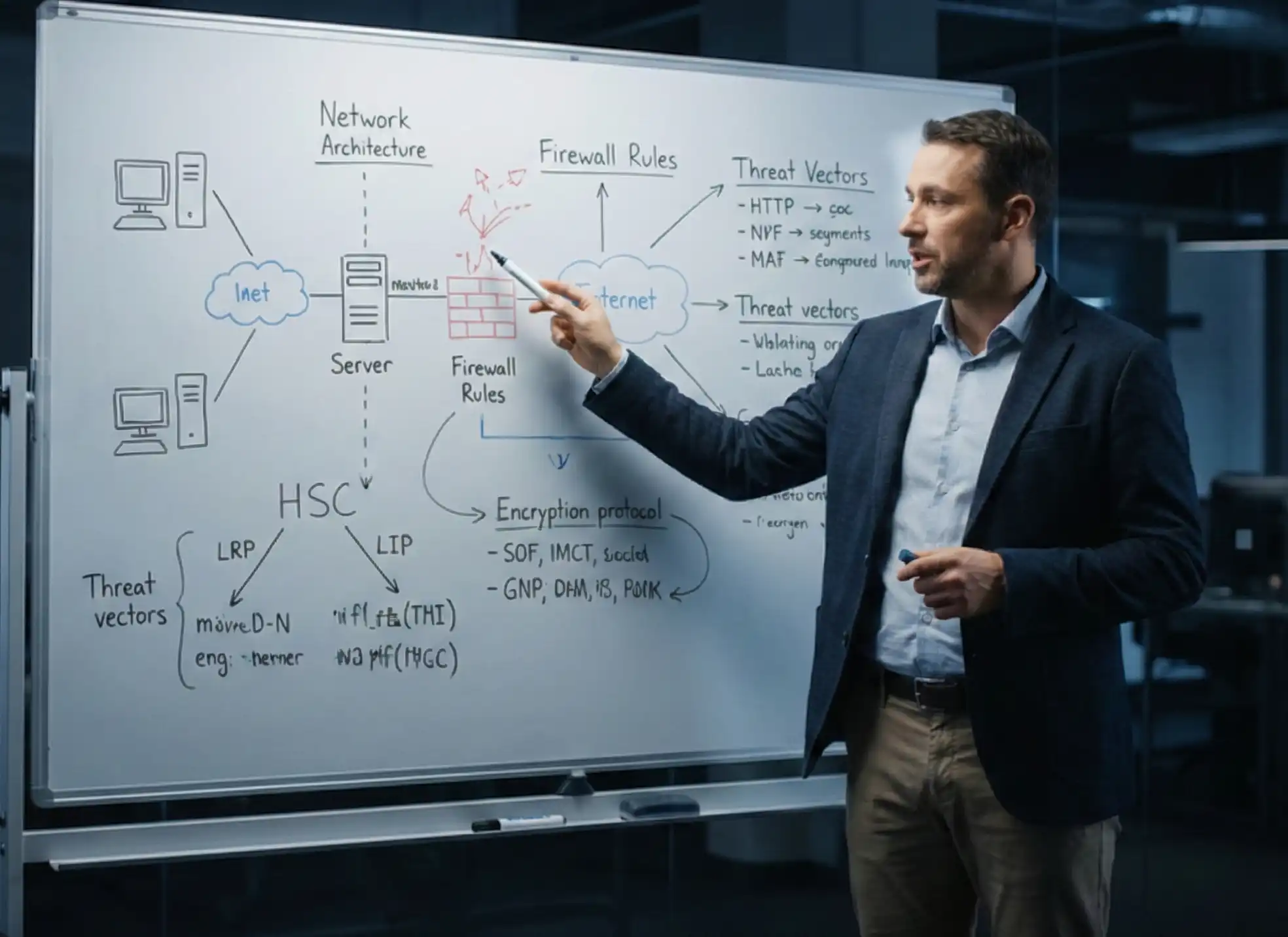
Training Camp instructor teaching network security at a whiteboard

How to get the most from it

Three steps, in this order.

Student working through practice questions at a laptop
Step 1

Take a baseline

Take the full test once without notes, so the score shows where you really stand.

Student reviewing material on a laptop
Step 2

Read every explanation

Including the ones you got right. The notes on the wrong choices explain the differences between similar concepts, like tokenization and encryption.

Students working on laptops in a Training Camp lab
Step 3

Fix one domain, then retake

Your results break down by domain. Study the weakest one for a week, then retake. Each Quick Test draws a fresh mix of questions.

PMP Practice Test

Frequently Asked Questions

Quick answers about the test, the PMI Project Management Professional (PMP) exam, and how to prepare.

Is this PMP practice test free?

Yes. Training Camp's PMP practice test is completely free. You get 50 scenario questions across the People, Process and Business Environment domains, with a written explanation for every answer choice.

How does this practice test work?

It is 50 multiple-choice questions written to PMI's 2026 Examination Content Outline, with an instant explanation after each answer and a 65-minute timer, which is timed to the pace of the real exam. Three questions share a short case scenario, similar to the case-study section on the real exam. You can retake it as often as you want.

How many questions are on the real PMP exam?

The updated PMP exam has 180 questions: 170 scored plus 10 unscored pretest items. You have 240 minutes, and the exam opens with a case-study section before moving to independent questions.

What score do I need to pass the PMP exam?

PMI does not publish a numeric passing score. Your result is reported as Above Target, Target, Below Target or Needs Improvement, both overall and by domain.

What domains does the PMP exam cover?

The 2026 exam covers three domains: People (33%), Process (41%) and Business Environment (26%). Roughly 60 percent of the questions reflect agile or hybrid approaches and about 40 percent are predictive.

What changed in the 2026 PMP exam?

The exam that launched on July 9, 2026 is built on PMI's updated Examination Content Outline. PMI used AI and sustainability as inputs to the job task analysis behind it, so expect AI to appear as scenario context in planning, estimating and reporting items; the exam also puts more emphasis on value delivery and sustainability, and opens with a case-study section.

What are the PMP eligibility requirements?

PMI's current requirements have four tiers of project leadership experience: 60 months with a high school diploma or equivalent secondary credential, 48 months with an associate or similar short-cycle degree, 36 months with a bachelor's degree, or 24 months with a degree from a GAC-accredited program. Every tier also requires 35 hours of project management training, which is waived if you hold an active CAPM. Qualifying experience must fall within the last 10 years.

How should you prepare for the PMP exam?

Study the PMI Examination Content Outline domain by domain, practice situational questions until the "what should the project manager do next" pattern feels natural, and consider a structured program such as Training Camp's PMP Boot Camp, which covers the 35 education hours and includes the exam voucher.

Instructor-led Training Camp class

Ready to pass it for real?

The PMP boot camp covers every exam domain with a live instructor, online or in person.

  • Exam voucher included
  • Free retake
  • 180 days of unlimited 1-on-1 coaching after class