


Hello, you are using an old browser that's unsafe and no longer supported. Please consider updating your browser to a newer version, or downloading a modern browser.
Training Camp • Cybersecurity Glossary
Network delivery with no QoS guarantees on latency, bandwidth, or ordering—the default internet model where packets are sent without prioritization.
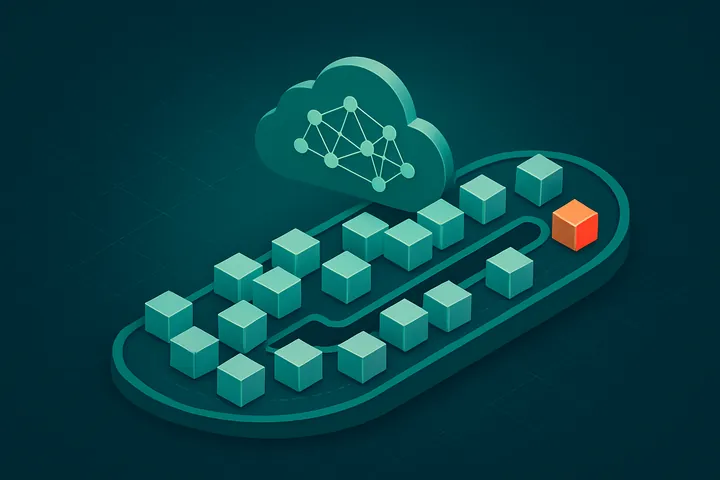
Best Effort Traffic Definition: Network delivery with no QoS guarantees on latency, bandwidth, or ordering—the default internet model where packets are sent without prioritization.
Best effort traffic is a network delivery model in which packets are forwarded without any guarantee of bandwidth, latency, ordering, or reliability. The network attempts delivery but makes no promises about speed, jitter, or error correction. It is the default behavior of IP and the public internet, used where strict performance guarantees are not required.
In practice, best effort means routers treat all such packets equally, queuing and forwarding them as capacity allows and dropping them during congestion without distinction. This contrasts with Quality of Service (QoS) approaches like DiffServ and IntServ, where traffic is classified, marked (for example with DSCP values), and given prioritized queuing or reserved bandwidth. In the DiffServ model, best effort corresponds to the default class with DSCP 0, the lowest-priority handling. Reliability and ordering, when needed, are pushed up to transport protocols such as TCP rather than provided by the network itself.
For security and resilience, the best effort model is relevant because it has no built-in protection against congestion or abuse. During a volumetric denial-of-service attack, best effort traffic competes equally for links, so legitimate packets are dropped alongside malicious ones. Network designers therefore apply QoS marking and policing to protect critical or control-plane traffic, ensuring that voice, management, or security telemetry is not starved when best effort traffic saturates a link.
For example, an enterprise WAN carries VoIP calls, video conferencing, and general web browsing over the same circuit. The network team marks VoIP as Expedited Forwarding and assigns it a priority queue, while ordinary web and file-download traffic remains best effort. When the link congests, the router drops or delays best effort packets first, so calls stay clear while web pages simply load a little slower.
Turn knowledge into credentials with our instructor-led cybersecurity boot camps.
View All Courses →