


Hello, you are using an old browser that's unsafe and no longer supported. Please consider updating your browser to a newer version, or downloading a modern browser.
Training Camp • Cybersecurity Glossary
A duplicated set of components or infrastructure that takes over when the primary fails, delivering high availability and fault tolerance with minimal downtime.
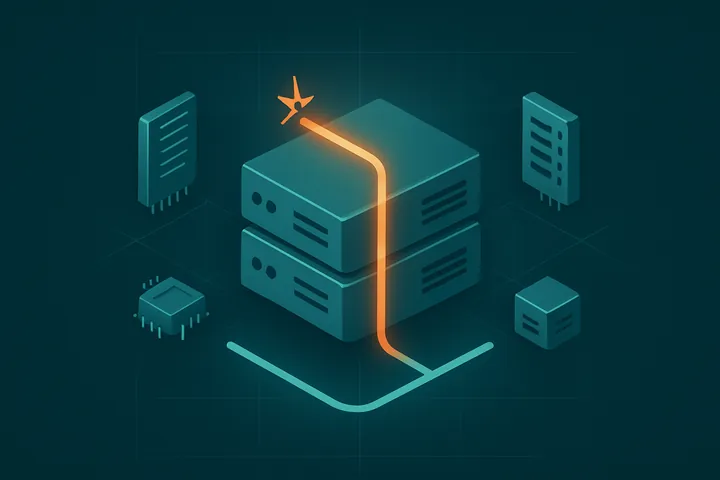
Redundant System Definition: A duplicated set of components or infrastructure that takes over when the primary fails, delivering high availability and fault tolerance with minimal downtime.
A redundant system is a duplicate set of components, resources, or infrastructure kept available so that operations continue if the primary system fails. By eliminating single points of failure, redundancy delivers high availability, fault tolerance, and reliability for critical environments such as data centers, networks, and industrial control systems.
Redundancy is implemented at many layers. Hardware redundancy includes dual power supplies, RAID disk arrays, and clustered servers; network redundancy uses protocols like HSRP, VRRP, and spanning tree alternates plus dual links and devices; site redundancy spans hot, warm, or cold disaster-recovery facilities. Failover can be active-active, where load is shared across all nodes, or active-passive, where a standby takes over on failure. Health checks, heartbeats, and load balancers detect outages and redirect traffic, often within seconds.
For security and resilience, redundancy directly supports the availability pillar of the CIA triad. Without it, a failed router, a corrupted disk, or a ransomware-encrypted server can halt business and destroy data. Redundant systems also blunt denial-of-service impact and give responders capacity to isolate a compromised node while a healthy one keeps services running. Critically, redundancy must be paired with isolation so a single attack or shared dependency does not take down primary and backup together.
For example, an online bank runs its core application across two data centers in active-active mode behind global load balancers, with database replication between sites. When a cooling failure forces one data center offline, the load balancers detect the unhealthy nodes and route all customer traffic to the surviving site. Account access continues uninterrupted, and the bank meets its recovery time objective without invoking a manual disaster-recovery process.
Turn knowledge into credentials with our instructor-led cybersecurity boot camps.
View All Courses →