


Hello, you are using an old browser that's unsafe and no longer supported. Please consider updating your browser to a newer version, or downloading a modern browser.
Training Camp • Cybersecurity Glossary
The radio signal strength a wireless device emits, measured in dBm; tuning it balances coverage, interference, and limiting how far signals leak for attackers.
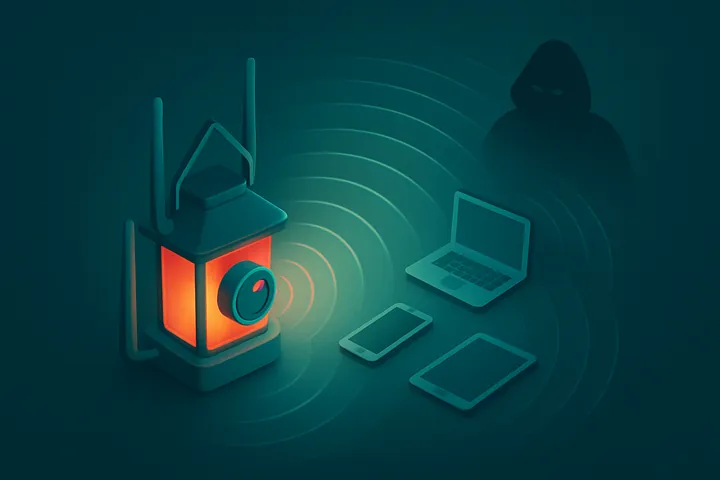
Transmit Power Definition: The radio signal strength a wireless device emits, measured in dBm; tuning it balances coverage, interference, and limiting how far signals leak for attackers.
Transmit power is the strength at which a wireless device radiates its radio signal, typically expressed in dBm (decibels relative to one milliwatt). It directly influences range, signal quality, and how far a signal propagates beyond intended boundaries. Adjusting transmit power optimizes coverage while controlling interference and limiting unwanted signal leakage that adversaries could exploit.
Transmit power is measured logarithmically: every 3 dB roughly doubles or halves power, and effective radiated power also depends on antenna gain (EIRP). Wireless controllers and access points can tune power statically or dynamically. Cisco's Radio Resource Management (RRM) and Transmit Power Control (TPC), for instance, automatically adjust each AP's power so neighboring cells overlap correctly without excessive co-channel interference, balancing capacity and coverage across the wireless network.
From a security perspective, transmit power defines the physical attack surface of a wireless network. Excessive power pushes a usable signal into parking lots, neighboring suites, or the street, giving attackers a place to capture frames, attempt cracking, or stage rogue-AP and evil-twin attacks from outside the building. Too little power creates coverage gaps that drive clients onto rogue or weaker connections. Regulatory limits (such as FCC and ETSI EIRP caps per band) also constrain legal maximums.
For example, a hospital tuning its wireless deployment discovers that ground-floor APs at full power blanket the visitor parking garage with a strong signal, letting someone in a car capture WPA2 handshakes for offline cracking. Engineers lower those APs' transmit power and reposition antennas so coverage stays inside the building footprint, shrinking the external attack surface while RRM maintains adequate indoor coverage and minimizes interference between adjacent cells.
Turn knowledge into credentials with our instructor-led cybersecurity boot camps.
View All Courses →