Hello, you are using an old browser that's unsafe and no longer supported. Please consider updating your browser to a newer version, or downloading a modern browser.

Training Camp's 3-day NIST CSF Profile 2.0 boot camp covers the updated Cybersecurity Framework — Govern function, community profiles, and implementation tiers. Exam voucher included.

Award-Winning Training Experience

Master NIST CSF 2.0 Implementation

Enhance your cybersecurity expertise with NIST CSF 2.0. Learn to implement, customize, and manage cybersecurity framework profiles for organizational risk management and compliance with expert instruction and practical exercises.

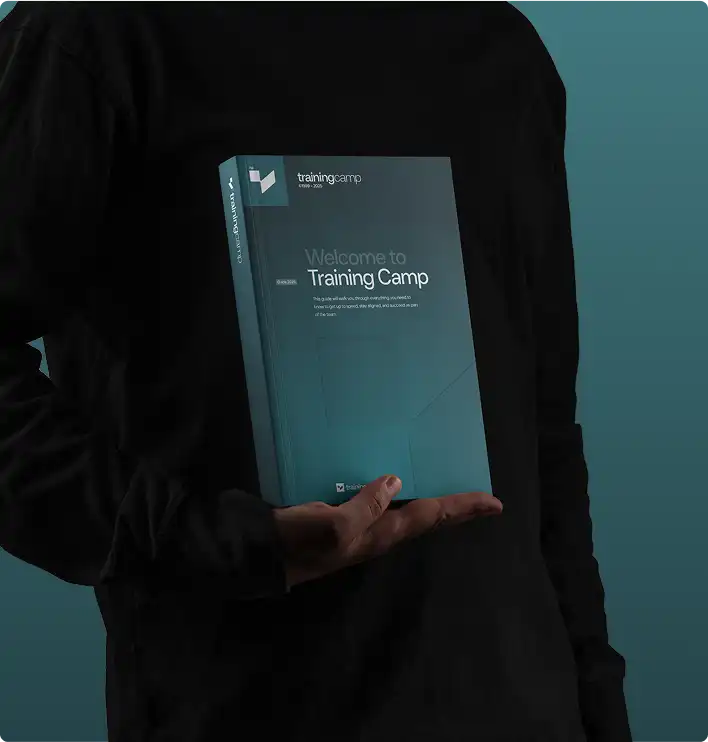
2026 NIST-CSF-2 Courseware
Student
Student
Student
Join 250,000+ certified alumni.
CISSP Professional

Certified Instructors

Learn from the Best

Official Training Camp

Authorized Training

Learn from the Experts

Learn Real-World Hands-on Skills. Hands-On. 2024 CSF 2.0 Update.

3 intensive days for security and risk professionals who need to build, assess, and operationalize a NIST CSF 2.0 Profile for their organization.

Program Abstract

REF: NIST-CSF-2 6
Official vendor courseware, taught as published.
Format Live, Instructor-Led
Duration 3

NIST CSF 2.0 Profiles, Built and Practiced.

This intensive 3-day boot camp covers the 2024 NIST Cybersecurity Framework 2.0 update, including the new GOVERN function alongside Identify, Protect, Detect, Respond, and Recover. You’ll build and customize Organizational and Community Profiles, set Implementation Tiers, and apply CSF 2.0 across real risk scenarios. Hands-on labs cover the DoD CIO emphasis on CSF 2.0 Profiles, how CSF 2.0 influences RMF and ATO workflows, and techniques for identifying and prioritizing cybersecurity risks. You leave with a working Profile draft and a plan to operationalize it back home.

Updated for CSF 2.0.

Curriculum reflects the February 2024 update, including the new GOVERN function and the full set of revised Categories and Subcategories. Not the old 1.1 material with a sticker on it.

Build a Real Profile.

Every attendee builds a working Organizational Profile during class using the Quick Start guides and reference templates from NIST. You leave with a document you can actually use, not just notes.

CSF 2.0 + RMF + ATO.

Understand how CSF 2.0 influences the Risk Management Framework and Authority to Operate process. Critical for organizations serving DoD CIO requirements or running parallel CSF and RMF programs.

·
Training materials including official courseware and study guides
Practitioner Led
Instructors are working security professionals, not just trainers.

"I don't teach from a textbook. I teach what happens in the SOC when the alert fires."

Jeff Porch

VP Ed. Services • CISSP, CISM CISSP: Certified Information Systems Security Professional. CISM: Certified Information Security Manager.

Choose Your Delivery Mode.

Same Curriculum
In-person classroom training session
A

In-Person

Immersive classroom instruction with direct instructor access, hands-on labs and peer collaboration.

  • Face-to-face instruction
  • On-site exam option
Student attending live online training
B

Live Online

The same instructors and curriculum, delivered live from anywhere on our virtual learning platform.

  • Zero travel required
  • Interactive breakout rooms
Offer

Save on this course with a current special offer

Team pricing, military discounts and a limited-time offer of the week. See what applies before you book.

See special offers
Get Started Today

Explore Your Training Options

Tell us about your training needs and we'll create a personalized plan.

NIST Cybersecurity Training

Award Winning Training

Recognized for excellence in cybersecurity education, our program delivers industry-leading expertise and resources.

NIST Training Certification

Time-Efficient Learning

Save time with our focused, streamlined approach to mastering the NIST Cybersecurity Framework 2.0.

Cybersecurity Framework Training

Sustainable Solutions

Equip your team with long-term skills to build and maintain effective cybersecurity strategies.

NIST Cybersecurity Framework Profile

Innovative Insights

Gain practical knowledge and creative solutions to implement the NIST framework effectively.

NIST Cybersecurity Framework Certification Cost

Proven Results

Trusted by thousands of organizations, our training consistently delivers measurable improvements in cybersecurity readiness.

NIST Standards And Guidelines

Expert Guidance

Learn from seasoned instructors with extensive experience in cybersecurity and NIST implementation.

NIST Cybersecurity Framework Profile 2.0 Boot Camp

Accepting Inquiries
+1

    Eligible for Special Pricing?

    We respect your privacy. No spam.

    COURSE STRUCTURE

    NIST Cybersecurity Certification Boot Camp
    Syllabus

    A structured path designed for working professionals.
    Each day builds on the last—momentum is everything.

    Request Info

    MODULE_ID: PREP

    Live Training QS: ~5
    BEFORE CLASS
    Critical Path

    Before Class

    This readiness enhances your learning experience and ensures a seamless start to the program.
    L.prep.1

    MODULE_ID: TC-CFP2-01

    Live Training QS: ~5
    DAY 1
    Critical Path

    Fundamentals of the Cybersecurity Framework

    CSF 2.0 Core: Functions, Categories and Subcategories
    L.01.1
    What Changed From CSF 1.1 to CSF 2.0
    L.01.2
    Govern: Organizational Context and Risk Management Strategy
    L.01.3
    Govern: Roles, Responsibilities, Policy and Oversight
    L.01.4
    Cybersecurity Supply Chain Risk Management Under GV.SC
    L.01.5
    Implementation Tiers 1 Through 4 and How to Use Them
    L.01.6
    CSF 2.0 Quick Start Guides and Informative References
    L.01.7
    Lab: Map Your Organizational Context Into GV.OC Outcomes
    L.01.8
    Organizational Profiles: Current State and Target State
    L.01.9
    Community Profiles and When to Adopt One
    L.01.10
    Identify: Asset Management, Risk Assessment and Improvement
    L.01.11
    Prioritizing Cybersecurity Risks With SP 800-30 Methods
    L.01.12
    Aligning the Target Profile With Organizational Goals
    L.01.13
    Lab: Draft the Current Profile Using the NIST Template
    L.01.14
    Lab: Score Subcategories With the CSF 2.0 Reference Tool
    L.01.15
    Lab: Build an Asset Inventory Aligned to ID.AM
    L.01.16

    MODULE_ID: TC-CFP2-02

    Live Training QS: ~6
    DAY 2
    Critical Path

    Implementation and Monitoring

    Protect: Identity Management, Authentication and Access Control
    L.02.1
    Protect: Awareness and Training and Data Security
    L.02.2
    Protect: Platform Security and Technology Infrastructure Resilience
    L.02.3
    Mapping Protect Outcomes to SP 800-53 Rev 5 Controls
    L.02.4
    Integrating CSF 2.0 Profiles Into Existing Security Programs
    L.02.5
    Aligning With ISO 27001, CIS Controls and SP 800-171
    L.02.6
    Lab: Select Controls to Close a Protect Gap
    L.02.7
    Lab: Document Evidence for PR.AA and PR.DS Subcategories
    L.02.8
    Detect: Continuous Monitoring Across Networks, Hosts and Services
    L.02.9
    Detect: Adverse Event Analysis and Incident Declaration
    L.02.10
    Logging, Alerting and Measuring Detection Coverage
    L.02.11
    How CSF 2.0 Influences RMF and ATO Workflows
    L.02.12
    DoD CIO Emphasis on CSF 2.0 Organizational Profiles
    L.02.13
    Lab: Gap Analysis Between Current and Target Profiles
    L.02.14
    Lab: Define Metrics for Monitoring Detect Outcomes
    L.02.15
    Prioritized Action Plan and Budget Justification
    L.02.16

    MODULE_ID: TC-CFP2-03

    Live Training QS: ~6
    DAY 3
    Critical Path

    Incident Response and Resilience

    Respond: Incident Management, Analysis and Mitigation
    L.03.1
    Respond: Incident Response Reporting and Communication
    L.03.2
    Aligning Response Plans With SP 800-61 Rev 3
    L.03.3
    Recover: Incident Recovery Plan Execution
    L.03.4
    Recover: Recovery Communication and Stakeholder Updates
    L.03.5
    Resilience Strategies, Backups and Business Continuity Links
    L.03.6
    Lab: Tabletop Exercise Mapped to Respond and Recover
    L.03.7
    Lab: Document Response and Recovery Gaps in the Profile
    L.03.8
    Lab: Finalize the Target Profile and Prioritized Gap Plan
    L.03.9
    Lab: Present the Profile to an Executive Audience
    L.03.10
    Operationalizing the Profile: Owners, Cadence and Reviews
    L.03.11
    Using Profiles to Answer Auditor and Customer Questionnaires
    L.03.12
    Governance Reporting to Boards With CSF 2.0 Outcomes
    L.03.13
    Maintaining the Profile Through Change and Reassessment
    L.03.14
    Capstone Review: Comprehensive Framework Implementation
    L.03.15

    MODULE_ID: POST

    Live Training QS: ~7
    AFTER CLASS
    Critical Path

    After Class

    NIST does not certify against the Cybersecurity Framework, so there is no exam.
    L.post.1
    COURSE PROGRESS Day 0 of 3
    FREQUENTLY ASKED QUESTIONS

    NIST Cybersecurity
    Boot Camp FAQ

    Real questions from real professionals who passed.
    Here's how we answer them.

    CSF 2.0 is the current version of NIST’s Cybersecurity Framework. The headline change is the addition of the Govern function alongside Identify, Protect, Detect, Respond and Recover, which moves accountability and oversight from an assumed background condition to something the framework asks you to evidence. It also expands supply chain risk coverage. A profile is how you express what the framework means for your specific organization.

    IT professionals, cybersecurity managers, compliance officers, and the executives and leaders who own the decision rather than the implementation. It works well for a mixed group, because CSF 2.0 is deliberately written to give technical and business stakeholders the same vocabulary.

    The core functions of CSF 2.0 and what each one actually asks for, how to build current and target profiles for your organization, how to run the gap analysis between them, and how to fold cybersecurity into enterprise risk management rather than running it as a parallel program. Case studies and practical exercises run through all three days.

    Three days of live instruction, available online or on site. Private delivery is common for leadership teams who want to build their profile together during the class rather than afterward.

    No strict prerequisites. A basic understanding of cybersecurity concepts is helpful, and the course is built to work for both newcomers and experienced practitioners. Executives without a technical background do fine here, which is part of the point of CSF 2.0.

    The Govern function is the structural change: oversight, roles, policy, and risk strategy now sit at the center rather than being implied. Supply chain risk management got a substantial expansion. The scope also broadened beyond critical infrastructure to any organization, and the implementation guidance now leans on profiles and tiers more explicitly.

    No. NIST does not certify against the Cybersecurity Framework, so there is no exam and nothing to renew. You receive a Training Camp certificate of completion for the three days. If you need a credential in this space, CRISC or CGRC are the usual choices.

    Take this one if CSF 2.0 specifically is what your organization has adopted or is being asked about, and you want to leave with profiles built. Take the four-day class if you need the wider NIST family and how the publications fit together. The three-day is the sharper tool, the four-day is the broader one.

    The course will not itself satisfy anyone, but it teaches you to produce what does: a documented current profile, a target profile, and a prioritized gap plan. That artifact is what auditors and enterprise customers are actually asking for when they ask whether you follow NIST, and most organizations cannot produce it.

    Governance and risk roles sit above analyst pay. Information systems security officers currently average around $118,000 in the United States, security control assessors around $107,000, and IT risk managers holding credentials such as CRISC commonly run from about $145,000 to $151,000. Pay tracks how much of the program you own rather than which framework you know.

    Get the Free
    NIST CSF 2.0 Course Guide

    • What the course covers, day by day
    • The lab environment and what you build in it
    • How the certificate of completion works
    Articles and Certification Resources

    NIST CSF Profile 2.0 Study Tools
    & Resources

    Expert insights to guide your certification journey.
    Real strategies from professionals who passed.

    Weighing this against another certification? Compare them head to head in Certification Matchups →

    Student Success Stories

    What Our Students Say

    Join thousands of certified professionals who trained with Training Camp

    ★★★★★

    Sarah, our trainer at Training Camp, was exceptional. Her approach to training was personalized, making it feel like she was mentoring each one of us individually.

    LR
    Lea Ree* U**Army NCOS
    ★★★★★

    As a project manager, I found his insights invaluable. He simplified complex AI concepts, making them digestible for everyone. Training Camp is truly fortunate t...

    CB
    Chr** Bee*** D**a Corp
    ★★★★★

    A must stop-by resort before any certification test. Teachers teach you something for life, rather than only for certification.

    ZA
    Zub** Ahm**
    ★★★★★

    I would highly recommend attending a Training Camp class to increase your knowledge on a specific subject or make yourself more marketable by validating your kno...

    CP
    Chr** Pet******* M**
    ★★★★★

    Training Camp provided me with a comprehensive and immersive learning experience with a great instructor to further my career.

    T
    TP H**lett Packard
    ★★★★★

    I believe self-study would have been much much harder to comprehend the information and pass the test on a first try. My colleagues who self-studied flunked the ...

    Continue Your Journey

    NIST CSF Profile 2.0 Related Courses

    Advance your career with these recommended certifications

    Featured on